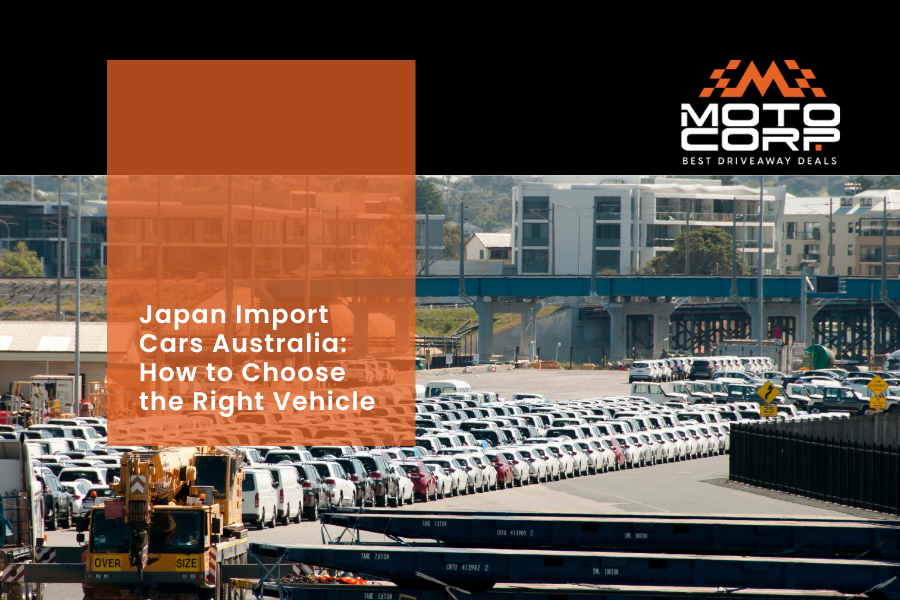
Let’s be completely honest: walking into the world of Japanese import cars in Australia is a bit like stepping into a candy shop. Whether you’re chasing a pristine Nissan Skyline under the 25-year rule, a luxury family hauler like the Toyota Alphard, or a quirky little turbo “kei” car to zip around Melbourne or Sydney, the appeal is massive. You get higher specs, lower kilometres, and build configurations that Aussie dealerships never even dreamed of offering.
But importing a vehicle or buying a fresh grey import down under isn’t as simple as clicking “add to cart.” Navigating the maze of government regulations, customs duties, biosecurity risks, and strict local compliance checks can quickly turn a dream ride into an expensive garden ornament if you don’t know what you’re doing.
In this comprehensive guide, we’ll break down how to choose the right vehicle from Japan, dodge the regulatory red tape, and make sure your hard-earned dollars buy a high-quality machine that’s fully legal on Australian roads.
1. Navigating the Legal Framework: Does Your Dream Car Qualify?
Before you spend a single dollar browsing auctions, you must verify how the vehicle will legally enter the country. The Australian Government controls grey imports strictly under the Road Vehicle Standards Act 2018, meaning you can’t just bring over a standard Japanese Domestic Market (JDM) commuter car if an equivalent model was already sold brand new by local Australian dealerships.
To legally secure a Vehicle Import Approval (VIA) through the federal ROVER portal, your vehicle must fit cleanly into one of the main approved import pathways.
The 25-Year Rule (Concessional RAV Entry)
This is the golden pathway for enthusiast jdm cars Australia wide. If a vehicle was manufactured exactly 25 or more years ago (calculated by the specific month and year of manufacture, not the registration date), it qualifies for simplified entry into the Register of Approved Vehicles (RAV). As of 2026, this means any vehicle built in 2001 or earlier can bypass the strict Specialist and Enthusiast Vehicle Scheme requirements.
The Specialist and Enthusiast Vehicle Scheme (SEVS)
For newer imported cars from Japan Australia enthusiasts want to bring over, the vehicle must be actively listed on the official SEVS Register. To get a spot on this list, a vehicle type must prove it meets strict niche criteria, such as exceptional performance, environmental innovation (like advanced hybrid systems), or extreme rarity.
Crucial 2026 Regulatory Warning: Australia has implemented tighter emission regulations (such as ADR 79/05 based on Euro 6d frameworks), which mandate strict real-world driving emissions testing. This has significantly altered permissions for newer Japanese hybrid and “kei” models on the SEVS register. Always double-check the ROVER portal to confirm a modern model’s current approval status before bidding, as older permissions are actively expiring over a three-year rolling window.
2. Choosing Your Sourcing Strategy: Auction vs. Local Import Dealer
When securing Japanese import cars Australia wide, you generally have two choices: brave the Japanese auction systems yourself via an export agent or buy a vehicle already sitting on compliance plates from a local specialist dealer.
| Sourcing Route | Key Advantages | Potential Risks |
| Direct Japanese Auction | • Access to thousands of vehicles weekly • Lowest possible purchase price • Full transparency of original auction condition | • Upfront capital required before seeing the car • Slower process (typically 8–12 weeks transit) • Heavy reliance on the agent’s inspection skills |
| Local Australian Import Dealer | • See, touch, and test drive the car immediately • Compliance and roadworthy are already completed • Protected by local Australian Consumer Law | • Higher purchase price due to dealer margins • Limited color and specification options • Risk of buying an “odometer wound-back” vehicle |
If you choose the auction route, your absolute best friend is the Japanese auction sheet. This document is a highly accurate report filled out by an independent inspector before the car rolls across the bidding block.
You should target cars graded 3.5, 4, or 4.5. Grade 3 or below usually means significant mechanical work or major body cosmetic fixes are required. Avoid anything marked with an “R” grade unless you are an expert mechanic, as this indicates a history of accident repair or structural chassis damage.
3. Calculating the True Landed Cost: It’s More Than Just the Winning Bid
The classic rookie mistake when hunting for Japan car imports Australia wide is assuming the auction price is the final price. The winning bid in Tokyo is simply the start of a long line of financial boxes that need ticking.
To ensure you don’t blow your budget, you need to calculate the true landed cost, which includes international shipping, local logistics, taxes, and mechanical workshop compliance.
The Landed Cost Checklist:
- FOB & CIF Fees: Free on Board (FOB) covers inland transport in Japan and export documentation. Cost, Insurance, and Freight (CIF) adds the price of ocean shipping (typically via Roll-on/Roll-off vessels or specialized containers).
- Customs Duty: Under the Japan-Australia Economic Partnership Agreement (JAEPA), vehicles manufactured natively in Japan can qualify for a 0% customs duty rate, provided you supply an official Certificate of Origin. Otherwise, a standard 5% duty applies.
- Goods and Services Tax (GST): A flat 10% GST is calculated on the total value of the import (which includes the vehicle’s purchase price, marine insurance, international freight costs, and any applicable duties).
- Luxury Car Tax (LCT): For high-end luxury imports, the LCT applies a 33% tax on the amount exceeding the federal threshold. For the 2025–2026 financial framework, this sits at $80,567 for standard vehicles and $91,387 for highly fuel-efficient models.
- Registered Automotive Workshop (RAW) Compliance: Once the car hits Australian soil, it must be legally modified and certified by a licensed RAW to meet the strict Australian Design Rules (ADRs). This process can cost anywhere from $2,000 to over $5,000 depending on the vehicle model.
4. Avoiding the Three Deadly Quarantine & Compliance Traps
Even if you buy a mechanically perfect car, failing to plan for Australia’s strict border enforcement can lead to massive fines, customs delays, or your vehicle being ordered out of the country at your expense.
The Zero-Tolerance Asbestos Policy
The Australian Border Force enforces an incredibly strict, zero-tolerance policy regarding asbestos. Many Japanese used cars Australia buyers target, especially older JDM classics manufactured before 2004, originally utilized components containing asbestos within brake pads, clutch plates, engine gaskets, or heat shields. You must ensure your vehicle is tested and cleared by an accredited testing facility before it leaves Japan, replacing any suspect components with modern alternatives.
Biosecurity and Soil Contamination
The Department of Agriculture, Fisheries and Forestry (DAFF) will meticulously inspect your vehicle for soil, seeds, organic matter, and live insects. If your car arrives with dirty underbody or leaves trapped in the cowl panel, it will be quarantined for an industrial deep clean, racking hundreds of dollars a day in terminal storage fees. Always pay for an intensive steam clean and vacuum at the Japanese port prior to shipping.
Odometer Fraud Protection
Because Japanese odometers are digital or easily swapped, some unscrupulous local sellers buy high-kilometre cars cheaply, wind back the clock, and sell them as low-kilometre gems. To protect yourself, always request the Japanese Export Certificate (Deregistration Document). This official government document lists the vehicle’s verified mileage readings recorded during its latest Japanese roadworthiness (Shaken) inspections.
Summary Guide: From Tokyo Auction to Australian Roads
Step 1: Check Vehicle Eligibility (1–2 Days)
Search the ROVER system or SEVS register to ensure the vehicle’s model code and build month legally qualify for Australian import under the 25-year rule or active SEVS guidelines.
Step 2: Secure a Local Agent and Inspect (1–2 Weeks)
Partner with an established broker or export agent in Japan. Have them translate the auction sheet and perform a physical pre-bid inspection to confirm the vehicle is mechanically sound and asbestos-free.
Step 3: Win the Bid and Apply for your VIA (2–3 Weeks)
Secure the vehicle at auction. Once you receive the official invoice and chassis numbers, lodge your Vehicle Import Approval (VIA) application via the ROVER portal immediately. Never ship a vehicle without an approved VIA.
Step 4: Biosecurity Cleaning and Export Logistics (3–4 Weeks)
Have the vehicle professionally steam-cleaned to satisfy DAFF requirements. Arrange roll-on/roll-off or container shipping to your preferred Australian port (e.g., Brisbane, Sydney, Melbourne).
Step 5: Customs Clearance and RAW Compliance (2–4 Weeks)
Hire a licensed customs broker to manage the ABF import declarations, pay your 10% GST, and transport the vehicle directly to an authorized Registered Automotive Workshop (RAW) for ADR modifications.
Step 6: Roadworthy Certificate and State Registration (1 Week)
Take your freshly complied vehicle to a local mechanic for a state Certificate of Roadworthiness (RWC). Present your paperwork, RAV entry confirmation, and proof of identity to your local state roads authority (like VicRoads or Service NSW) to secure your number plates.
Frequently Asked Questions
Can I import any used car I want from Japan to Australia?
No, you cannot. Australia has strict laws to protect local industries and road safety. A car must be at least 25 years old or be explicitly listed on the Specialist and Enthusiast Vehicle Scheme (SEVS) register. Standard commuter cars available locally are generally not eligible.
How much does it cost to comply a Japanese import car?
RAW compliance costs fluctuate based on the specific vehicle model. For common models with existing data packs, expect to pay between $2,000 and $4,500. This covers mandatory physical modifications like child restraint anchors, new tyres, unleaded fuel restrictors, and official software updates.
What do the numbers on a Japanese auction sheet mean?
Auction grades scale from 1 to 5. Grade 5 or ‘S’ represents a vehicle in brand-new or flawless condition. Grades 4.5 and 4 indicate excellent used cars with minimal wear, while Grade 3.5 denotes average condition. Grade R means the car has an accident or repair history.
Do I have to pay import duty on Japanese cars in Australia?
Under the Japan-Australia Economic Partnership Agreement (JAEPA), vehicles manufactured natively in Japan are exempt from the standard 5% customs duty. However, you must provide an official Certificate of Origin to claim this. You are still required to pay the standard 10% Australian GST.
How long does the entire car importing process take?
On average, the process takes between 8 to 12 weeks from the day you win the auction bid to drive it on local roads. This timeline accounts for shipping schedules, customs clearance, biosecurity inspections, and the backlog of compliance work at your chosen Registered Automotive Workshop.
Can I drive a left-hand drive Japanese import in Australia?
Most Australian states require vehicles to be right-hand drive for standard road registration. Left-hand drive vehicles are strictly restricted and generally can only be registered if they qualify under specific historic or classic vehicle schemes, usually requiring the car to be over 25 to 30 years old.
Ready to Find Your Perfect Japanese Import?
Choosing the right import doesn’t have to be gambling. By understanding the legal pathways, accurately budgeting for your true landed costs, and ensuring strict compliance with local customs laws, you can secure an incredible piece of engineering that turns heads across Australia.
At Moto-Corp, we specialize in taking the stress out of the equation. Our expert team handles everything from auction sourcing and rigorous pre-bid inspections right through shipping, customs clearance, and premium workshop compliance. Let us do the heavy lifting while you focus on planning your first weekend cruise.
Ready for your dream ride? Contact Moto-Corp today for a free consultation!
Leave a Reply