Author: Gdayseo

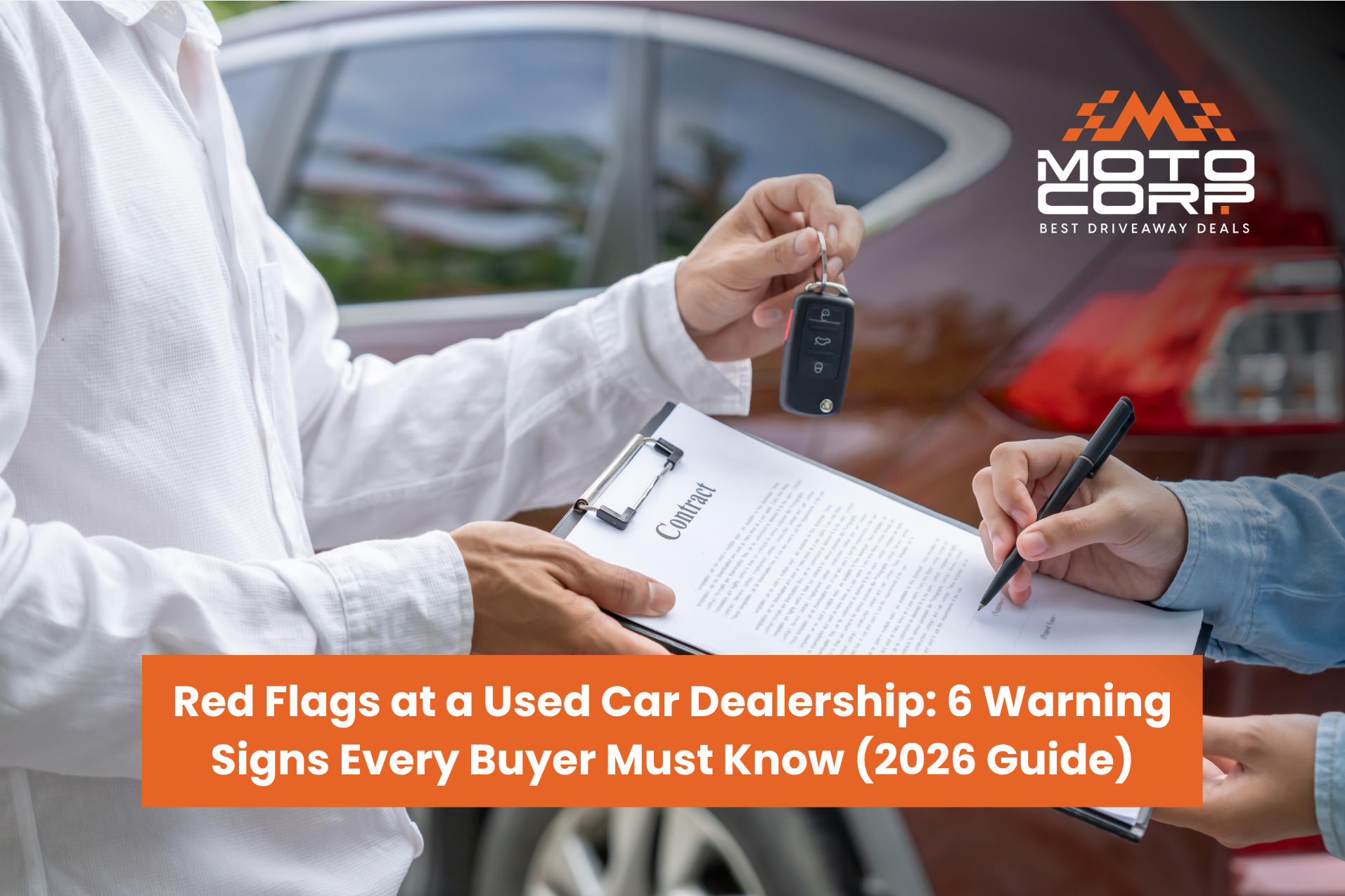
  •  Red Flags at a Used Car Dealership: 6 Warning Signs Every Buyer Must Know (2026 Guide) 

     Red Flags at a Used Car Dealership: 6 Warning Signs Every Buyer Must Know (2026 Guide) 

    Buying a used car in Australia should be an exciting milestone, whether you’re after a rugged 4×4, a dependable work ute, or a family SUV. However, for many buyers, the process comes with uncertainty, as seemingly great deals can quickly turn into costly mechanical problems. 

    In 2026, sophisticated technology allows for seamless masking of vehicle faults. Securing a reliable investment now demands a rigorous professional assessment over a cursory inspection. It requires a sharp eye for the red flags at a used car dealership and a firm understanding of your rights as a consumer. 

    At Moto-Corp, we are committed to absolute transparency. We believe that when you understand the used car dealership warning signs, you are empowered to make a choice that protects both your safety and your hip pocket. This guide is designed to be your comprehensive companion, helping you distinguish between a reputable professional and a dealer who is simply looking for a quick win at your expense. 

    1. The Pricing Paradox: If It Seems Too Good to Be True 

    The first and most obvious red flag often appears before you even set foot on the lot. We all keep an eye on the digital marketplaces, and when a late-model vehicle appears at a price significantly lower than the current market value, it is tempting to rush in before someone else grabs it. However, extreme price outliers are rarely a stroke of good luck. 

    Why Drastic Underpricing is a Warning Sign 

    In the professional car trading world, everyone has access to the same valuation data. If a dealer is listing a vehicle for several thousand dollars less than their competitors, there is a reason for it. This is a classic entry point for used car scams to avoid. 

    Often, these vehicles have a hidden history that explains the price drop. It could be a statutory write-off that has been repaired poorly, or perhaps the vehicle was caught in a flood zone. While the car might look pristine after a professional detail, the electronic systems and structural integrity could be compromised. 

    Furthermore, a suspiciously low price is frequently used as a bait and switch tactic. You arrive to inspect the bargain, only to be told it was sold five minutes ago, but the dealer has a much more expensive alternative ready for you to look at. This is a hallmark of a dishonest car dealer trying to manipulate your emotions and your time. 

    2. Obstruction of Independent Mechanical Inspections 

    One of the most critical steps in the buying process is the independent pre-purchase inspection. Any reputable dealer in Australia should welcome the opportunity for a third-party professional to look over their stock. If you suggest bringing a mobile mechanic or taking the car to a local workshop and the dealer flatly refuses, you should consider the deal dead then and there. 

    Common Excuses Used to Block Inspections 

    A dishonest car dealer will often hide behind policy to prevent an inspection. They might claim that their insurance does not cover outside mechanics on the premises, or that their own internal 100-point safety check is all you need. Do not fall for this. An internal check is biased by the dealer’s desire to sell the car. 

    An independent mechanic is working for you. They will look for: 

    • Structural Damage: Evidence of past accidents that have been covered up with fresh paint or filler. 
    • Fluid Contamination: Signs of oil mixing with coolant, which indicates a blown head gasket. 
    • Diagnostic Faults: Modern cars can have their dashboard warning lights cleared right before a test drive. A professional scan tool will reveal the history of these faults. 

    If a dealer is confident in the quality of their inventory, they have nothing to fear from an external set of eyes. Blocking an inspection is one of the loudest bad car dealer signs in the industry. 

    3. The Absence of a Verifiable Service History 

    In Australia, we place a high value on a well-maintained logbook. The vehicle logbook serves as the complete record for all maintenance activities which have occurred throughout the vehicle’s existence. The vehicle shows that its previous owner maintained it through authorized mechanic maintenance, which maintained its complete mechanical functionality. 

    Identifying Used Car Buying Mistakes Related to Paperwork 

    Missing service records show that maintenance work remains unperformed, and odometer readings become impossible to verify because of this situation. The substantial wear inside a vehicle shows two different patterns from its minimal odometer reading. All vehicle owners at Moto-Corp receive complete service history records which verify all maintenance work done on their vehicles. 

    4. High-Pressure Sales Tactics and Artificial Urgency 

    Car buyers need accurate information from industry experts because buying a car involves making a costly investment. A good salesperson works as a consultant who helps you find the perfect product that meets your needs. The best choice for you is to wait until you have finished your contract if you feel that someone is forcing you to sign it. 

    How to Spot a Dishonest Car Dealer Through Behaviour 

    Watch out for the use of artificial urgency. The salesperson who claims that today only provides valid prices which multiple customers are interested in purchasing wants to control your decision-making process. The salespeople want you to make a contract before you have finished thinking and researching your options. 

    Another tactic is the focus on weekly payments rather than the total purchase price. By breaking the cost down into small, manageable increments, they can hide a heavily inflated total price or exorbitant interest rates. Always bring the conversation back to the drive-away price and the total cost of the loan. 

    Remember, you are the one with the money. You have the right to walk away, sleep on the decision, and return when you are ready. A dealer who tries to strip you of that time is not looking for your best interests. 

    5. Vague Financing and the Add-on Insurance Trap 

    The finance office is often where the most sophisticated used car scams to avoid taking place. After you have agreed on a price for the car, you might be led into a secondary room to discuss financing. This is where many buyers let their guard down. 

    Common Financial Red Flags 

    Be wary of mandatory add-ons. In Australia, the Australian Securities and Investments Commission (ASIC) has taken a hard line against the forced sale of add-on insurance products. If a dealer tells you that you must purchase gap insurance, tyre and rim protection, or an aftermarket extended warranty to get your finance approved, they are likely acting outside of legal guidelines. 

    Furthermore, ensure that the interest rate you are being offered is competitive. Some dealerships will add a dealer mark-up to the interest rate provided by the lender, which can add thousands of dollars to your loan over several years. 

    Always ask for a written quote that includes: 

    • The total amount is financed. 
    • The exact interest rate (comparison rate). 
    • A full breakdown of all fees and charges. 
    • The total amount you will have paid at the end of the term. 

    If the dealer is vague about these figures or refuses to give you a copy of the contract to take home and review, it is a massive red flag. 

    6. Refusal to Provide a PPSR Certificate or Clear Title 

    The Personal Property Securities Register (PPSR) is a vital tool for any Australian car buyer. It provides a national check to see if a car has any “skeletons in the closet.” If a dealer becomes defensive or vague when you ask for a PPSR report, you are likely looking at a compromised vehicle. 

    Why the PPSR is Non-Negotiable 

    A dealer who is hiding the PPSR status might be trying to offload a vehicle with: 

    • Financial Encumbrance: If there is still money owing on the car from a previous owner, the bank can repossess it even after you’ve paid the dealer in full. 
    • Written-off Status: The car may have been involved in a major accident or flood and declared a total loss by an insurer, then patched up for resale. 
    • Stolen Status: Selling a stolen vehicle is a massive legal risk for the buyer. 

    At Moto-Corp, we believe every Australian deserves peace of mind. We ensure that every vehicle we sell has a clear title and a clean PPSR report, giving you the confidence that your new asset belongs to you alone. 

    Understanding Your Australian Consumer Law Rights 

    Australian Consumers Receive Protection Under Australian Consumer Law While They Shop. A licensed dealer must provide a car that meets minimum quality standards and serves its intended use when a customer purchases a vehicle. Many states also have mandatory statutory warranties for cars that meet certain age and mileage criteria. 

    A dealer who claims that a vehicle is sold without warranty protection tries to deny you your legal entitlements because the vehicle needs to have warranty protection according to legal requirements. The situation presents a major warning sign because the dealer does not conduct business activities according to honest standards. 

    Making the Right Choice with Moto-Corp 

    Choosing where to buy your next vehicle is just as important as choosing the car itself. By keeping these red flags at a used car dealership in mind, you can navigate the market with your eyes wide open. You deserve a dealer who values your business and respects your intelligence. 

    At Moto-Corp, we have built our reputation on doing things differently. We have seen the bad car dealer signs that plague the industry, and we have made it our mission to be the antithesis of that experience. We offer a curated selection of high-quality vehicles, each backed by a transparent history and a commitment to excellence. 

    Why Choose Moto-Corp? 

    • No Hidden Agendas: Our pricing is transparent and reflective of the current Australian market. 
    • Expertly Vetted Stock: We do not sell cars that we would not be happy for our own families to drive. 
    • Genuine Consultation: Our team exists to assist you in locating your ideal vehicle which meets your needs instead of pursuing their sales targets. 
    • Full Compliance: We fully honor all Australian consumer laws with corresponding licensing obligations. 

    Conclusion 

    The journey to your next car should be a positive one. By being aware of how to spot a dishonest car dealer and avoiding commonly used car buying mistakes, you are setting yourself up for success. Do not be afraid to ask the hard questions, demand the paperwork, and walk away if something feels off. Your intuition is often your best tool. 

    If you are looking for a car-buying experience that is free from the typical stress and red flags, we invite you to visit us. Let the team at Moto-Corp show you how easy and transparent buying a used car can be when you are dealing with professionals who actually care about the result. 

    Explore our current range today and experience the difference of a dealership that puts you first. 

    Frequently Asked Questions 

    What is the most common red flag?  

    Refusal to allow an independent mechanical inspection is the primary warning sign. It almost certainly indicates the dealer is concealing mechanical or structural defects. 

    Should I buy a car without service logbooks?  

    Exercise extreme caution. Missing records makes it impossible to verify maintenance history or mileage. If logbooks are absent, a professional inspection and PPSR check are non-negotiable. 

    How should I respond to sales pressure?  

    Walk away. Reputable dealers provide the time necessary for due diligence. Artificial urgency is a tactic used to bypass logical decision-making or hide unfavourable terms. 

    Is as-is selling legal for licensed dealers?  

    Generally, no. Under Australian Consumer Law, dealers must provide vehicles of acceptable quality and honour statutory warranties. Attempting to sell as-is is a hallmark of a dishonest operator. 

    Why is a PPSR check necessary?  

    It protects you from repossession by ensuring the vehicle has no outstanding finance. It also confirms that the car has not been reported stolen or written off. 

  • Importing Used Cars Australia 2026: The Ultimate Step-by-Step Guide to Process and Compliance 

    Importing Used Cars Australia 2026: The Ultimate Step-by-Step Guide to Process and Compliance 

    Owning a unique piece of automotive engineering, maybe a pristine JDM icon or a rare European tourer, is more doable now than it’s ever been. But as we head into 2026, importing used cars to Australia has become a pretty sophisticated game. It’s no longer as simple as finding a car and sticking it on a boat; you’ve got to navigate a high-tech regulatory maze, hit strict environmental standards, and manage logistics with surgical precision. 

    At Moto-Corp, we’ve spent years helping enthusiasts and dealers get high-quality imported cars onto Australian soil. Whether you’re after a performance beast or just a reliable daily driver that stands out from the local crowd, understanding the 2026 process is the only way to avoid a nightmare at the wharf. 

    This guide breaks down the current regulations, the logistical hurdles, and why picking the right partner for compliance & delivery in Pakenham is easily the most critical piece of the puzzle. 

    The 2026 Import Landscape: What’s Actually Changed? 

    The way we bring cars into the country has seen some big shifts lately. While the Department of Infrastructure, Transport, Regional Development, Communications and the Arts has smoothed out the paperwork through the ROVER (Road Vehicle Regulator) system, don’t let that fool you, the bar for safety and emissions has never been higher. In 2026, the government isn’t just looking at the paperwork; they are looking for absolute precision in how these vehicles meet Australian standards. 

    Why Importing is Growing in 2026 

    If you’ve noticed more unique plates on the road, there’s a good reason for it. The demand for imported cars in Australia has surged for a few simple reasons: 

    • Total Global Access: Gone are the days of relying on a middleman with a fax machine. The internet has made Japanese and European auctions completely transparent. You can now browse high-res photos and detailed inspection sheets for imported cars in Tokyo or Berlin right from your couch. 
    • Better Value for Your Money: It’s a bit of an open secret, imported cars in Australia often come with better specs and much lower kilometres than local equivalents for the same price. You’re often getting a fresher car for less. 
    • The Enthusiast Factor: Some of the best driving experiences simply never made it to our shores. Whether it’s a niche performance variant or a modern electric city car, importing used cars to Australia is often the only way to get your hands on something truly special that stands out from the local crowd. 

    Phase 1: Research and Vehicle Eligibility 

    Before you spend a single cent, you must confirm that the vehicle you have your eye on is actually allowed to enter the country. Not every car is eligible for importing used cars Australia wide. 

    The Specialist and Enthusiast Vehicle Scheme (SEVS) 

    Most used imports enter under SEVS. To be eligible, a vehicle typically needs to meet one of the following criteria: 

    1. Performance: The vehicle offers a level of performance that is not available in the local market. 
    1. Environmental: The vehicle uses alternative power sources (Electric/Hybrid) that are not widely available here. 
    1. Rarity: The model was produced in limited numbers. 
    1. Left-Hand Drive: Specific provisions for classic or unique left-hand drive vehicles. 

    Checking the SEVS Register 

    Always check the official SEVS Register. If the model isn’t listed, you (or your agent) will need to apply to have it added, which requires significant technical data and evidence. 

    Phase 2: The Paperwork, ROVER and VIA 

    Once you have identified an eligible vehicle, the real work begins. You cannot ship a car to Australia without a Vehicle Import Approval (VIA). 

    Applying Through ROVER 

    The ROVER portal is the digital heart of importing used cars Australia. You will need to create an account and submit a formal application. This process involves: 

    • Providing proof of ownership (Invoice/Bill of Sale). 
    • Submitting the vehicle’s de-registration certificate from its home country. 
    • Paying the relevant government application fees. 

    Expert Tip: Never ship the car until you have the VIA in your hand. If a car arrives at an Australian port without approval, you could face massive storage fines or, in extreme cases, the vehicle may be ordered for export or destruction. 

    Phase 3: Logistics, Shipping and Quarantine 

    Transporting imported cars across the ocean is a logistical dance. You generally have two choices: Roll-on/Roll-off (RORO) or Container Shipping. 

    RORO vs. Container 

    • RORO: The car is driven onto a specialised ship. It is generally cheaper but exposes the car to the elements and more frequent handling. 
    • Container: The car is secured inside a 20ft or 40ft box. This is the preferred method for high-value imported cars in Australia as it offers maximum protection from salt air and physical damage. 

    The Biosecurity Hurdle (DAFF) 

    Australia has some of the strictest biosecurity laws in the world. Your car must be steam-cleaned and free of any organic matter (soil, seeds, insects) before it leaves the origin port. Upon arrival, the Department of Agriculture, Fisheries and Forestry (DAFF) will inspect the vehicle. If they find even a tiny amount of dirt in the wheel arches or a leaf in the radiator, the car will be sent for expensive off-site cleaning. 

    Phase 4: Taxes and Duties, The Hidden Costs 

    Many first-time importers forget to factor in the extra costs that hit once the ship docks. 

    1. Customs Duty: Generally, 5% of the vehicle’s value (though some free-trade agreements may apply). 
    1. GST: 10% calculated on the total value of the car plus shipping and insurance (CIF). 
    1. Luxury Car Tax (LCT): If the value of the car exceeds the government’s threshold, you will be hit with a 33% tax on the amount above that threshold. 

    Phase 5: Compliance, The Moto-Corp Difference 

    This is where many people get stuck. An imported car cannot be registered in Australia until it has been modified and inspected to meet Australian Design Rules (ADR). This is known as the compliance process. 

    What Happens During Compliance? 

    When a car arrives at our facility for compliance & delivery in Pakenham, it undergoes a rigorous transformation: 

    • Child Restraints: Installing ADR-approved anchor points. 
    • Tyres and Braking: Ensuring all components meet local safety standards. 
    • Emissions Testing: Confirming the vehicle meets 2026 Australian environmental standards. 
    • Labels: Affixing the RAW (Registered Automotive Workshop) compliance plate. 

    Choosing a Workshop in Pakenham 

    Pakenham has become a hub for automotive excellence. By choosing compliance & delivery in Pakenham, you are placing your vehicle in the hands of specialists who understand the ROVER system inside out. At Moto-Corp, we don’t just fix the car; we ensure it is safe for your family and compliant with the long haul. 

    Phase 6: Registration and On-Road Costs 

    Once the compliance plate is attached, the car is officially a Road Vehicle in the eyes of the Australian government. However, you still need to get it onto the bitumen. 

    1. Roadworthy Certificate (RWC): A final mechanical check to ensure the car is safe. 
    1. State Registration: Paying your local motor bureau (like VicRoads) for your plates and registration stickers. 
    1. Stamp Duty: A state-based tax on the transfer of a motor vehicle. 

    Common Mistakes When Importing Used Cars Australia 

    Over the last decade, we have seen people lose thousands of dollars on simple errors. Avoid these common traps: 

    • Buying Rust-Bucket Specials: A car might look great in photos from a snowy climate, but under-body rust is a death sentence during the Australian compliance process. 
    • Ignoring the ODS (Ozone Depleting Substances) Rule: If your car’s air conditioning uses old-school gases, you need a special license to import it, or the gas must be degraded before shipping. 
    • Underestimating Logistics Costs: Always get a door-to-door quote. Port handling fees and wharfage can add up to $1,500+ unexpectedly. 

    The Benefits of Working with Moto-Corp 

    Importing a vehicle should be an exciting journey, not a stressful mountain of paperwork. By partnering with Moto-Corp, you get: 

    • Transparency: We explain every fee upfront, so there are no port-side surprises. 
    • Expertise: Our team knows exactly what the inspectors are looking for during compliance and delivery in Pakenham. 
    • Network: We have established relationships with shipping lines and customs brokers, ensuring your car moves through the system as fast as possible. 

    Sustainability and Electric Imports in 2026 

    2026 has seen a massive surge in the importation of high-spec used EVs and Hybrids from Japan. These imported cars often feature battery technology and interior tech that hasn’t hit the Australian second-hand market yet. 

    EV Compliance Challenges 

    Importing an electric vehicle requires specific expertise in high-voltage systems. Our Pakenham workshop is fully equipped to handle EV compliance, ensuring that charging ports are compatible with Australian infrastructure and that battery health is documented for your peace of mind. 

    Timeline: How Long Does It Actually Take? 

    While every case is different, here is a realistic 2026 timeline for importing used cars Australia wide: 

    • Week 1-2: Research and Vehicle Selection. 
    • Week 3: Apply for ROVER VIA (Approval can take 2-4 weeks). 
    • Week 4-8: Shipping (depending on the origin). 
    • Week 9: Customs and Quarantine Clearance. 
    • Week 10-11: Compliance & delivery in Pakenham. 
    • Week 12: Registration and driving your new car. 

    Importing for Business vs. Personal Use 

    If you are a dealer looking to stock imported cars in Australia, the process is slightly different. You will likely be operating under a Commercial RAWs licence, which allows for higher volumes but requires even stricter reporting. For the individual enthusiast, the personal path is more common but limited to one vehicle per year. 

    Final Checklist for Your 2026 Import 

    Before you hit bid on that auction site, run through this list: 

    • [ ] Is the car on the SEVS register? 
    • [ ] Have I calculated GST, Duty, and LCT? 
    • [ ] Do I have a quote for compliance & delivery in Pakenham? 
    • [ ] Is the vehicle free of rust and significant accident damage? 
    • [ ] Do I have the original de-registration papers? 

    Conclusion 

    Importing used cars Australia wide is a rewarding way to own a vehicle that reflects your personality and passion. While the regulations of 2026 are strict, they are there to ensure that every car on our roads is safe, clean, and built to last. 

    Don’t let the paperwork stand between you and your dream car. At Moto-Corp, we take the complexity out of the process. From the moment your car lands at the port to the second we hand you the keys in Pakenham; we handle the heavy lifting. 

    Whether you are looking for advice on a specific model or are ready to start the ROVER process, we are here to help. Our compliance & delivery in Pakenham service is the gold standard for quality and reliability. 

    Ready to Start Your Import Journey? 

    Connect with the experts at Moto-Corp today. Let’s get your dream car out of the auction yard and into your driveway. 

    Contact Moto-Corp for an Import Consultation & Compliance Quote 

    Frequently Asked Questions 

    Can I import a car that is less than 25 years old? 

    Yes, provided it is listed on the Specialist and Enthusiast Vehicle Scheme (SEVS) register. If it isn’t a classic (over 25 years), it must meet specific performance, tech, or rarity criteria to be eligible for importing used cars Australia wide. 

    How much does compliance cost in Pakenham? 

    Compliance costs vary significantly depending on the model. A standard Japanese import might range from $2,500 to $4,500, including parts and labour for ADR modifications. High-end luxury or rare models may cost more. 

    Is it cheaper to import a car myself? 

    While you can save on dealer margins, DIY importing is risky. One mistake in the ROVER application or a failed quarantine inspection can cost you thousands. Most people find that using an agent like Moto-Corp saves money in the long run by avoiding “storage trap” fees at the port. 

    What happens if my car fails biosecurity? 

    If DAFF finds soil or seeds, the car is moved to a secure wash-bay. You will be charged for the transport and the cleaning, which can easily add $500–$1,000 to your bill. This is why we insist on professional cleaning at the port of origin. 

  • UK Car Imports in Australia: Everything You Need to Know Before You Buy 

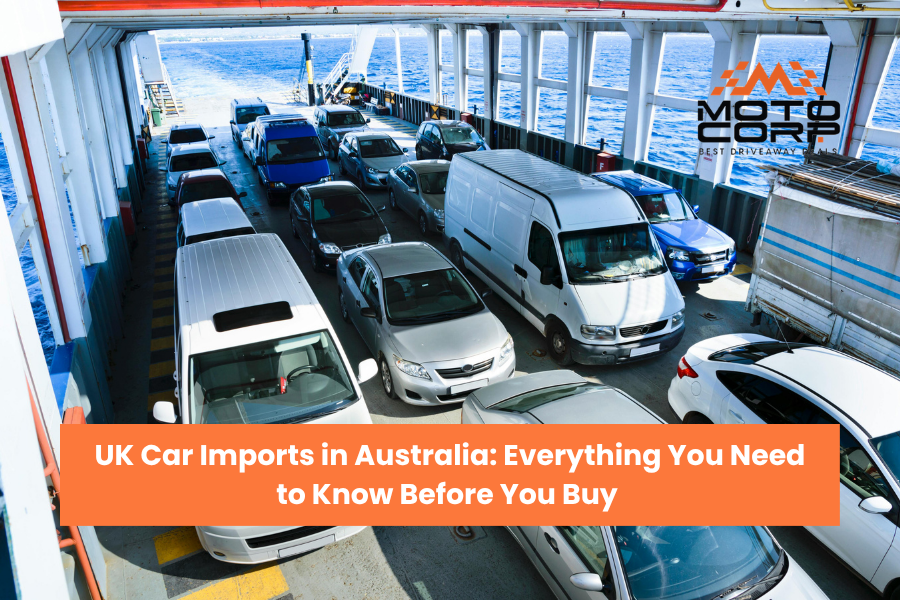
    UK Car Imports in Australia: Everything You Need to Know Before You Buy 

    Let’s be honest: the Australian car market is great, but it’s always had a few missing pieces. Whether you’re hunting for a bespoke British classic, a high-spec Euro-luxury model that never officially landed here, or you’re an expat moving back to the “Sunburnt Country” and can’t imagine life without your current daily driver, UK car imports in Australia have never been more popular. 

    That said, as we move through 2026, the “how-to” has changed quite a bit. With the Road Vehicle Standards Act (RVSA) now in full swing, the shift to the ROVER online portal, and the massive impact of the Australia-EU Free Trade Agreement, the old rulebook has basically been tossed out. 

    Importing a car today isn’t just about shipping; it’s about navigating a whole new world of digital approvals and tax breaks. At Moto-Corp, we’re seeing that while there’s more red tape in some areas, there are also some huge wins for Aussie buyers if you know where to look. 

    The 2026 Landscape: Why Import from the UK Now? 

    The Melbourne and Sydney car scenes have always had a soft spot for British engineering. But why is 2026 specifically a “golden year” for UK car imports in Australia? 

    1. The Right-Hand Drive Advantage 

    The most obvious hurdle for any Australian car enthusiast is the steering wheel. Unlike the US or European mainland markets, the UK is a right-hand drive nation. This makes right-hand drive imports to Australia significantly easier to register. You save the eye-watering prices of steering conversions that may well run to above 30,000 in case of modern luxury cars and still preserve the originality of the car dashboard and steering geometry. 

    2. The Australia-EU Free Trade Agreement (FTA) 

    According to an agreement between Australia and the European Union, the long-awaited trade agreement has entered a critical implementation stage as of March 2026. While the UK is no longer in the EU, many vehicles sourced through UK dealerships carry “European Origin” certifications or fall under reciprocal trade arrangements. This has led to the removal of the 5% import tariff on a wide range of passenger vehicles. If you’re eyeing a BMW, Mercedes, or Jaguar from a UK dealer, your “landed cost” just got a whole lot more attractive. 

    3. Better Specs and Rare Models 

    It is common to see high-performance variants, limited-edition trims, and manual-transmission options in the UK market that just did not make it to the tick box in Australia dealership. Should you want a particular specification of Land Rover Defender, a manual-geared Porsche, or a decent example of an Aston Martin, then you can always rely on Blighty to get the deal. 

    Understanding the “ROVER” Gatekeeper 

    If you haven’t heard of ROVER (Road Vehicle Regulator), you’ll soon become very familiar with it. In 2026, every single UK vehicle import to Australia must pass through this digital portal. 

    No Approval, No Entry 

    Gone are the days of old-school paper “VIA” (Vehicle Import Approval) forms. Now, you must lodge your application via ROVER before the car leaves the UK. When you arrive in an Australian port, and your car has no Concessional RAV Entry or a Type Approval, the Australian Border Force (ABF) will hold on it in a bonded warehouse whilst the storage charges accrue at an alarming rate- or even will direct orders to re-export it at your cost. 

    The RAV (Register of Approved Vehicles) 

    Once your car is approved, it gets entered onto the RAV. This is an electronic database that has replaced the old physical “compliance plates” we used to see under the bonnet. If it’s not on the RAV, you can’t get it registered with VicRoads, Transport for NSW, or any other state body. 

    Choosing Your Import Pathway 

    Not every car enters Australia under the same set of rules. Understanding these pathways is the difference between a smooth ride and a total write-off. 

    The 25-Year Rule (The Enthusiast’s Favourite) 

    If your car was manufactured at least 25 years ago, you’re in luck. The Older Vehicle Concessional Pathway is the most flexible way to bring British cars for sale into Australia. These vehicles don’t have to meet modern Australian Design Rules (ADRs) as strictly as a These cars do not necessarily comply with modern Australian Design Rules (ADRs) to the same extent that a new car would. This is the “Golden Ticket” to those who would wish to import a classic Mini, an old E-Type, or a vintage Landy. 

    The Personal Imports Scheme 

    Are you an expat moving back to Oz? You can bring your car to the UK under this scheme if you have owned and used your car in the UK more than 12 months and you are either a permanent resident or a citizen returning to live in this country. 

    • The Catch: You should be in a position to demonstrate that you are physically in the UK during that 12 month. No buying a car and leaving it in a garage while you travel! 

    Specialist and Enthusiast Vehicles (SEVS) 

    If the car is modern but specialist, meaning it offers something the Australian market doesn’t have (like a specific performance model or a rare eco-vehicle), it might qualify under SEVS. This is a complex pathway that usually requires a Registered Automotive Workshop (RAW) to verify the vehicle upon arrival. 

    Logistics: Shipping Cars from UK to Australia 

    You’ve found the car in London or Birmingham. How do you get it to Brisbane or Perth? There are two main ways to handle shipping cars from the UK to Australia. 

    RORO (Roll-On, Roll-Off) 

    Imagine an enormous floating car park. Your car is driven onto the ship in the UK and driven off in Australia. 

    • Pros: It is the most cost effective sometimes on ordinary SUV and daily drivers. 
    • Cons: You leave your car uncovered to the elements on the docks and can never leave any personal items in it. No spare parts in the boot are allowed! 

    Shared or Dedicated Container Shipping 

    Your car is locked up in a 20ft or a 40ft steel container. 

    • Advantages: Salt spray and theft protection are maximum. This is all that high-value classics or luxury exotics can do. 
    • Disadvantages: It is more expensive than RORO though you can transport spares or personal effects along with the car. 

    The Financial Reality: Duty, GST, and LCT 

    This is where most first-time importers get a bit of a shock. The price you pay the seller in the UK is only the beginning. In 2026, the tax calculations look something like this: 

    1. Customs Duty 

    Generally, this is 5% of the car’s value. However, as mentioned, the new trade agreements mean many UK vehicle imports to Australia are now duty-free, provided they meet “Rules of Origin” requirements. 

    2. Goods and Services Tax (GST) 

    GST is 10% and is calculated on the “Value of the Taxable Import” (VOTI). 

    The Formula: $(Customs Value + Duty + Shipping Cost + Insurance) \times 10\%$ 

    3. Luxury Car Tax (LCT) – The 2026 Update 

    LCT applies to vehicles with a value above a certain threshold. For the 2025–26 financial year: 

    • Standard Vehicles: Threshold is $80,567. 
    • Fuel-Efficient Vehicles (now defined as <3.5L/100km): Threshold is $91,387. 
    • Zero-Emission Vehicles (EVs): A massive win for 2026—the threshold for EVs has been raised to $120,000 to encourage the “green” transition. 
    • The Rate: 33% on every dollar above those thresholds. 

    Bio-Security: The DAFF “Clean” Requirement 

    Australia has some of the strictest quarantine laws on the planet. If a single UK ladybird or a clump of English soil is found on your car, it will be quarantined. 

    The “Clean” Requirement 

    You must steam clean and clinically vacuum your car before it gets out of the UK. 

    • The “Hidden” Spots: We observe a car fail very often due to dirt in the wheel arches, in the spare tyre well or behind the grille of the radiator. 
    • PFAS Bans: DAFF has paid more attention to chemical contaminants in 2026. Make sure your cleaning agents are in line to the biosecurity standards used in Australia. 

    The Asbestos Ban  

    Australia has a zero-tolerance policy to asbestos since 2003. When importing an older England car import to Australia (before 2000) you need to show a certificate by a NATA-certified (or similar) lab demonstrating that the parts of the car, such as gaskets, brake pad and clutch plates, are free of asbestos. 

    • Warning: A letter from a mechanic saying “it looks fine” will NOT be accepted. Without a lab report, the ABF may order the destructive testing of your car. 

    8. On-Road Compliance: Making it Legal 

    After the car has cleared the customs in Port Melbourne or Botany, it is not road-legal yet. You must fulfil Australian Design Rules (ADRs). 

    Common Modifications Needed: 

    • Child Restraint Anchorages: Many UK cars don’t have the specific tether points required by Aussie law. 
    • Lighting: In certain cases, indicators or fog lights may have to be set to fit the visibility requirements of the local area. 
    • Speedometer: where the UK uses MPH, the law in Australia demands KPH on the primary display (most contemporary digital dashboards can do so after a button press). 

    State Registration 

    A Blue Slip (unregistered vehicle inspection) will be required in NSW. In Victoria, it is a roadworthy certificate (RWC). Although each state is slightly different, it is always good to have a domestic partner who is devoted to the particular inspectors in your region. 

    9. Common Pitfalls to Avoid 

    After a decade of helping legends bring their dream cars over, we’ve seen where people trip up. 

    1. The Factor of Rust: UK roads are sprayed with salt during the winter. The car that is in perfect condition in photographs may have a chassis that is not so perfect. A professional Pre-Purchase Inspection (PPI) with a special concern for the undercarriage should be obtained always. 
    1. Forgetting the VAT: If you are buying a “newish” car in the UK, you might be eligible to claim back the 20% UK VAT (Value Added Tax). This can offset a huge chunk of your Australian import costs. 
    1. Underestimating the Timeline: From the moment you buy the car to the moment you drive it out of a RAW workshop in Australia, expect 3 to 5 months. 

    10. Why Moto-Corp is Your Best Mate in Importing 

    The paperwork for UK car imports in Australia is enough to give anyone a headache. At Moto-Corp, we offer a “Port-to-Driveway” service. We handle: 

    • ROVER & RAV Lodgements: We ensure your digital “paperwork” is flawless so your car doesn’t get stuck in port. 
    • Customs Brokerage: We use the latest 2026 trade agreements to ensure you don’t pay a cent more in Duty than required. 
    • Bio-Security Management: We organize the pre-shipment cleaning of asbestos checks to prevent expensive DAFF delays. 

    Conclusion: Ready to Hit the Aussie Roads? 

    The process of importing a car in UK and Australia is not a short one and it is not only a physical undertaking. Finally, in 2026, the technology and trade legislation begins to favour the importer. Granted you do your homework, honor the ROVER process and make sure your car is Aussa-clean; you can land a splendid car that is not like the rest. 

    Don’t let the red tape stop you from getting behind the wheel of a British masterpiece. 

    Get Your Import Quote Today 

    Want to know exactly what it will cost to land your dream UK car in your driveway? 

    Contact Moto-Corp for a Tailored Import Feasibility Study 

  • Used Luxury Cars Pakenham 2026: BMW, Mercedes & Audi Pre-Owned Options 

    Used Luxury Cars Pakenham 2026: BMW, Mercedes & Audi Pre-Owned Options 

    Across Pakenham, Officer, and Berwick, the area is growing quickly, with busier roads, new developments, and more premium cars appearing in local driveways. However, buying a brand-new European car from an inner-city dealership comes with a key drawback; it begins to lose value the moment you drive it onto the Princes Highway, often resulting in a significant drop in value within the first year. 

    That’s why in 2026, the smart money is moving toward used luxury cars in Pakenham wide. Whether you’re after the razor-sharp handling of a BMW, the pure prestige of a Mercedes-Benz, or the tech-heavy “Virtual Cockpit” of an Audi, the pre-owned market has become the “sweet spot” for genuine value. 

    At Moto-Corp, we don’t believe that “used” should ever mean “second best.” We’ve seen enough “cheap” imports and neglected trade-ins to know that the difference between a dream drive, and a mechanical nightmare comes down to the history of the car and the integrity of the dealer. This guide is here to skip the salesman-speak and show you exactly what to look for in a pre-owned luxury vehicle in today’s market. 

    The 2026 Value Peak: Why Buying Used Makes Sense Now 

    If you’ve been keeping an eye on the Australian car market, you’ll know that 2026 is a unique year. A few years back, global supply chains were a mess and used car prices were through the roof. Thankfully, things have leveled out. We are now seeing a massive influx of high-quality, three-to-five-year-old vehicles hitting the market as corporate leases wrap up. 

    Beating the Depreciation Curve 

    A new luxury car can lose up to 40% of its value in the first three years of its life. When you search for used luxury cars in Pakenham, you’re essentially letting the first owner pay for that depreciation. By the time a car reaches our lot at Moto-Corp, it still has that “new car” feel and all the modern safety tech, but the price tag is significantly more realistic for a family budget. 

    Accessing Higher Specs for Less 

    In the pre-owned market, your dollar simply goes further. Instead of settling for a base-model “entry-level” new car, that same budget can often land you a top-of-the-range pre-owned BMW Mercedes Audi Melbourne enthusiasts would be proud of, complete with the panoramic sunroof, the premium Nappa leather, and the upgraded sound system you want. 

    BMW: The Ultimate Driving Machine for the 3810 Postcode 

    BMW has never been a car to the driver. A BMW is difficult to out match in pure engagement in the case of Pakenham, where we have a combination of narrow suburban streets and wide country roads leading to Gippsland. 

    The BMW 3 Series & 5 Series 

    These remain the kings of the pre-owned sedan market. We have a high amount of 2022 and 2023 models coming in 2026. These vehicles are generally well-kept and are completed with the newest iDrive systems that remain futuristic. 

    • Pro Tip: Look for the M-Sport packs. They don’t just look more aggressive; they hold their resale value much better when it’s time for you to upgrade again. 

    The X-Range (X3 & X5) 

    Pakenham is SUV territory, plain, and simple. A used BMW X5 offers that “king of the road” feeling but handles more like a sporty sedan than a heavy truck. If you’re doing the school run at Lakeside or heading up to the hills for the weekend, the xDrive all-wheel-drive system gives you that extra bit of confidence on those greasy, wet Melbourne winter mornings. 

    Mercedes-Benz: Pure Class in Melbourne’s South East 

    Mercedes-Benz isn’t just a car; it’s a statement of success. But in 2026, it’s also a very practical choice for the repeat buyer luxury cars to attract. The reliability of their modern turbocharged engines has made them a staple in the pre-owned market. 

    The C-Class & E-Class 

    If you’re commuting into the city or working around the South East, the comfort of a C-Class is a breakthrough. The interior tech, specifically the MBUX voice control, is still the industry leader. It makes a long commute feel significantly shorter when the car is doing heavy lifting for you. 

    The GLE & GLC 

    These are the heavy hitters for families in Pakenham and Berwick. They offer massive boot space and top-tier safety ratings. When you’re looking at these pre-owned, pay close attention to the service history. A Mercedes that has been looked after by a specialist will run like a watch for decades. 

    Audi: Tech, Style, and Quattro Precision 

    Audi has carved out a massive following in Melbourne’s South East, mostly thanks to their “Quattro” all-wheel-drive system and their understated, modern design language. 

    The Audi Q5 & Q7 

    They are the arguably the best general-purpose SUVs in the Australian market. They do not scream like the BMW or Mercedes, but the quality of the build is unmatched. Virtual Cockpit (the digital display behind the steering wheel) is a feature that cannot be left out as it remains a futuristic feature in 2026. 

    The A4 & A5 

    Slick, low key and exceptionally fuel-efficient. When you need luxury but do not want to be perceived as one who is trying to be overly stylistic, Audi used car is the solution. They are especially popular among professionals who are located in the Pakenham business hubs. 

    Certified Drive-Away Deals: What Are You Actually Getting? 

    You’ll see a lot of ads for certified drive-away deals around Pakenham. But what are you actually paying for? At Moto-Corp, we believe “drive-away” should mean exactly that—no hidden surprises, no “plus on-roads” talk. 

    • The Price is the Price: This includes the GST, the Victorian stamp duty, and the transfer fees. You do not need to do the paperwork; we do it. 
    • Rigorous Roadworthy (RWC): In Victoria, the bare minimum is RWC. We go further. We test the items not on a standard RWC such as checking the infotainment system is free of glitches, climate control is as icy as it is, and the sensors are in ideal condition. 
    • Warranty Peace of Mind: A luxury car is a complicated engineering item. We provide clear, transparent warranty options, so you aren’t left high and dry if a sensor decides to act up six months down the track. 

    Maintenance: How to Keep Your Luxury Car Feeling New 

    One of the biggest myths is that used luxury cars Pakenham owners buy are a nightmare to maintain. This is only when you do not care about the basics. In 2026, maintenance is proactive in nature. 

    Preventative Over Reactive 

    A luxury car doesn’t usually just break; it gives you signs. It could be such details as the alteration of the sound of the engine, or a warning light on the dashboard, but the point is that it should be dealt with in time. At Moto-Corp we advise that Specialist service is done after every10,000km-15,000km to ensure that everything is in proper condition. 

    Using the Right Fluids 

    This is what most people are mistaken in. European engines are manufactured to narrow specifications and need synthetic oils and high-octane gasoline (95 or 98). Using “cheap” fuel might save you $10 at the pump, but it can cost you thousands of engine cleaning and sensor replacements later. 

    Why Moto-Corp is the Choice for Pakenham Locals 

    We know there are plenty of shiny dealerships closer to Melbourne CBD. But there’s a reason people keep coming back to us. 

    We’re Your Neighbours 

    We know the local roads. We know that a car in Pakenham needs to be as comfortable on a gravel track out toward Gembrook as it is on the Monash. We select our stock based on what our local community needs, durable, high-performing, and safe vehicles. 

    The Repeat Buyer Advantage 

    We pride ourselves on being a destination for the repeat buyer luxury cars market. Many of our clients are in their third or fourth car from us. We don’t treat people like sales targets; we treat them like neighbors. We’d rather sell you the right car today, so you’ll come back to see us in three years when you’re ready for an upgrade. 

    Buying Advice: The 2026 Luxury Checklist 

    If you’re out kicking tyres this weekend, here is your “no-nonsense” inspection guide: 

    1. Digital Service Logs: Most modern BMWs and Mercedes vehicles don’t have a paper book anymore; it’s all in the car’s computer. Make sure those logs are green and up to date. 
    1. Tyre Condition: Luxury cars often run on “Run-Flat” tyres. These are great for safety but expensive to replace ($400+ per tyre). Examine the tread; and, when they are almost done, have that to consider in your offer. 
    1. Electronics Check: Take 15 minutes to sit in the car and start the engine. Test every button. Does the Apple CarPlay connect? Do the electric seats move smoothly? Does the reverse camera have a clear picture? 
    1. The Cold Start: It is always important to listen to the engine being started when it is cold. Any rattles or squeaking that are gone in a minute are typically a sign that a belt is broken, or a tensioner is broken very soon. 

    Frequently Asked Questions (FAQ) 

    Are used luxury cars expensive to service in Pakenham?  

    Not really. The trick is to avoid big-city flagship dealers. Local specialists in the Pakenham area have the exact same diagnostic gear but much lower overheads. This renders it extremely expensive to maintain a BMW or Audi on the road, which is near to the cost of a luxury Japanese SUV. 

    Can I get a car loan for a 2022 Mercedes-Benz?  

    Absolutely. In fact, many people find that the finance terms on used luxury cars Pakenham wide are actually better. Because a pre-owned Mercedes has already done its biggest bit of depreciation, banks often see them as “safer” assets, which can lead to surprisingly good interest rates. 

    What is the most reliable luxury brand in 2026?  

    It’s a close race, but pre-owned BMW Mercedes Audi Melbourne enthusiasts all have their favourites. Currently, BMW’s “B-Series” engines are winning awards for being incredibly tough. Audi’s “Quattro” system is still the king of longevity, and Mercedes is famous for building gearboxes that last forever. The secret to all of them? A full-service history. 

    Do you take trade-ins at Moto-Corp?  

    Yes, we do. Whether you’re trading in a reliable old Hilux, a family like Ford, or a 10-year-old Audi, we offer fair, market-competitive valuations on the spot. We prefer to trade locally since we are aware of the history of cars in our locality. 

    Which luxury car is best for fuel economy?  

    Should you be concerned with the cost at the pump, seek after the Audi Ultra’s or the Mercedes “d” (diesel) models. These are absolute highway stars and can easily get you from Pakenham to the city and back all week on a single tank. We also have a growing range of Hybrid options for even better savings. 

    What should I check before buying a used Euro car?  

    Always check the digital service log. Most modern luxury cars don’t use paper books anymore; they’re all stored on the car computer. If the “service” light is green and the tyres have plenty of tread, you’re usually onto a winner. 

    Why buy from a Pakenham dealer instead of the city? 

    It comes down to local accountability. We’re part of the community here. We choose our stock to suit local roads, cars that are just as comfortable on a Gippsland backroad as they are on the Monash Freeway. And we are within five minutes of each other, not an hour of traffic to ask you a question. 

    Conclusion 

    Car purchase should not be a mere transaction and done at the end of the day but should be an experience. You are hard-working, you spend a lot of time on the road, and you just need to drive something that makes you smile every time you press the remote. 

    The market for used luxury cars in Pakenham has never been more vibrant. With the massive range of pre-owned BMW Mercedes Audi Melbourne has to offer right here in the South East, you don’t need to waste your weekend trekking into the city. 

    At Moto-Corp, we’ve got the certified drive-away deals that make sense for your wallet and the local, honest service that makes sense for your peace of mind. 

    Ready to find your next car? 

    Don’t just take our word for it. Come down to Moto-Corp, grab a coffee, and let’s sit in a few cars. Whether you’re a first-time luxury buyer or a repeat buyer luxury cars expert, we’re here to help you find the perfect fit. 

    Browse Our Current Luxury Stock  

    Call the Moto-Corp Team: 0408 444 283 

  • Want to Import a Car from Japan? Read This Before You Pay Anyone a Dollar 

    Want to Import a Car from Japan? Read This Before You Pay Anyone a Dollar 

    So, you’ve been scrolling through Japanese auction listings at 2 AM again, haven’t you? We have all been there. You see a pristine Toyota Alphard, a legendary R34 Skyline, or perhaps a fuel-efficient Honda Fit Hybrid for a price that looks like an absolute steal compared to what’s sitting on a dealership lot in Sydney or Melbourne. 

    But before you hit “bid” or send a deposit to an offshore exporter, we need to have a serious chat. 

    Importing a car from Japan isn’t just about winning an auction and waiting for a boat. In 2026, the Australian import landscape is stricter than ever. Between the ROVER system, zero-tolerance asbestos testing, and the complex Specialist and Enthusiast Vehicle Scheme (SEVS), there are a dozen ways to lose your shirt if you don’t know the local rules. 

    In this exhaustive guide, we’re pulling back the curtain on the JDM car import process. No fluff, no sales pitch, just the cold, hard facts every Aussie needs to know before they spend a single dollar. 

    The “Golden Rule” of 2026: Is the Car Even Legal? 

    The biggest mistake Aussies make is buying a car that the Department of Infrastructure simply won’t let into the country. You can’t just bring in any old car because it’s cheap. To import a car from Japan, the vehicle must fit into one of these specific legal “pathways.” 

    The 25-Year Rule (The Collector’s Pathway) 

    As of 2026, any vehicle manufactured in 2001 or earlier is generally eligible for import under the “Older Vehicles” concessional pathway. 

    • The Specifics: Eligibility is calculated down to the month of manufacture. If a car was built in June 2001, it becomes eligible in June 2026. 
    • Modifications: The car should not have substantial modifications of less than 25 years of age. As a case in point, a Skyline (R32) with a current engine swap to a 2024 can be refused under this particular rule. 

    The SEVS Register (Specialist & Enthusiast Vehicle Scheme) 

    They should be registered on SEVS Register in case of cars that are less than 25 years old. This is for vehicles that offer something unique to Australia, think high-performance, environmental tech (hybrids), or mobility features (Welcabs). 

    • The Model Report Catch: Even if a car is on the SEVS list, you cannot import it unless an approved Model Report exists. This report is the technical blueprint used to ensure the car meets Australian Design Rules (ADR). 

    The Personal Import Scheme 

    If you’ve lived in Japan for more than 12 consecutive months and owned the car during that time, you might be able to bring it back. However, the 2026 rules require mountain loads of evidence regarding your residency and “intent to relocate permanently.” 

    Navigating the Japanese Used Car Auction System 

    The Japanese used car auction is a high-speed, high-stakes environment. To succeed, you must understand the “Auction Sheet”, the car’s medical record. 

    Decoding Auction Grades 

    Grade Meaning Strategic Advice 
    S / 6 Brand New Rare and expensive; usually showroom stock. 
    5 / 4.5 Excellent The “Sweet Spot” for quality imports. Minimal wear. 
    Good Reliable daily drivers; expect minor cosmetic wear. 
    3.5 / 3 Average/Poor Likely has rust, dents, or mechanical issues. Proceed with caution. 
    R / RA Repaired Has an accident history. Can be a bargain, but risky for resale. 

    Japan Car Export Compliance 

    Before a car leaves ports like Yokohama or Osaka, it must clear Japan car export compliance. This includes obtaining the Export Certificate (Yushutsu Masho). In 2026, the Australian Border Force requires the original physical document. If this is lost in the mail, your car is effectively a very expensive garden ornament once it arrives in Australia. 

    The 2026 ROVER System: Your Digital Gatekeeper 

    Since the Road Vehicle Standards Act (RVSA) took full effect, all imports are managed through ROVER (Road Vehicle Regulator). 

    You must apply for a Vehicle Import Approval (VIA) before the car is loaded onto a ship. If a car arrives at an Australian port without a VIA, the Australian Border Force will not release it. You’ll be hit with storage fees (often $100+ per day) while you scramble for paperwork, and in many cases, the government may order the car to be re-exported or destroyed at your expense. 

    The “Hidden” Costs: A 2026 Financial Reality Check 

    The price you see in Japan is the FOB (Free on Board) price. Your “landed and complied” cost will be significantly higher. 

    Estimated Cost Breakdown (AUD) 

    • Ocean Freight: $3,500 to 6,500 (Ro-Ro would be less expensive; Container would be more secure). 
    • Import Duty: 5% of the Customs Value (5% in most cases, with Free Trade Agreements that Japanese-built cars are usually free, however, paperwork is needed). 
    • Importation GST: 10 percent is applied on (Value + Duty + Freight + Insurance). 
    • Luxury Car Tax (LCT): In the 2025-26 financial year, the limit is 80,567 (standard) and 91,387 (fuel efficient vehicles). Anything above this, 33% of any dollar is paid to the government. 
    • Asbestos Testing: $500 – $1,200. Australia has Zero Tolerance policy. In case your JDM legend of 1990s has asbestos gaskets or brake pads, they should be taken out of the car prior to it leaving the customs. 
    • Quarantine (DAFF): $500 – $1,500 to steam clean and examine exotic pests or seeds. 

    Right-Hand Drive Import Regulations & Compliance 

    While Japan and Australia both drive on the right, right-hand drive import regulations still require the car to be modified to meet Australian Design Rules (ADR). 

    This must be prepared by a Registered Automotive Workshop (RAW). In 2026, compliance includes: 

    1. Safety Modifications: ADR approved tyres, seatbelt and child restraint anchorages. 
    1. RAV Entry: The car is digitally entered into the Register of Approved Vehicles, which has replaced the old physical “compliance plates.” 
    1. Emissions Testing: Ensuring the Japanese exhaust and engine specs meet 2026 Australian environmental standards. 

    Avoiding the “JDM Trap”: Scams to Watch For 

    The JDM market is currently booming, and that attracts “shonky” operators. Here is how to protect your “dollar”: 

    The Odometer Rollback 

    A car with 190,000km in Japan is suddenly listed with 70,000km for the Australian buyer. Always demand a History Check and verify the mileage on the original Japanese Export Certificate. 

    The “Salted” Chassis 

    Cars from northern Japan (Hokkaido) often suffer from severe underbody rust due to salted roads. Scammers often spray the undercarriage with black “deadener” to hide the rot. Always get an independent inspection before bidding. 

    The “Fake Exporter” 

    If the price looks 30% lower than everyone else and they only accept Western Union or Crypto, walk away. Legitimate exporters have a verifiable track record and usually work with established Australian brokers. 

    The Asbestos “Zero Tolerance” Policy (Crucial for 2026) 

    One of the quickest ways to lose your car is by ignoring the asbestos testing requirements. Australian border force (ABF) is very strict. Any vehicle produced prior to 2004 can be considered at high risk in 2026. 

    • Testing: Before the car leaves Japan, you should have the NATA-approved (or equivalent) lab test parts such as brake pads, clutch plates and gaskets. 
    • Certification: A simple letter from the seller saying “the car is clean” will not work. You need a formal lab report. 
    • Seizure: If asbestos is found at the Australian border, the car may be seized, and you will be fined. You’ll then have to pay for professional removal in a bonded warehouse, which can cost thousands. 

    Shipping: Ro-Ro vs. Container 

    When you import a car from Japan, you have two main choices for transport: 

    Roll-on/Roll-off (Ro-Ro) 

    • How it works: Your car is driven onto a giant floating parking garage. 
    • Pros: Most cost-effective ($3,000 – $4,500). 
    • Cons: Car is exposed to the elements and port handling. Not suitable for non-running vehicles. 

    Container Shipping 

    • How it works: Your car is strapped inside a 20ft or 40ft steel container. 
    • Pros: Maximum protection from salt, air, and theft. Great if you import spare parts with the car. 
    • Cons: Expensive ($6,000 – $8,500). Requires specialized unloading at the port. 

    Top Japanese Cars to Import in 2026 

    If you’re looking for inspiration, these models are currently topping the “most wanted” lists for Australian ports: 

    • Family Luxury: Toyota Alphard & Vellfire (30 and 40 Series). These are the ultimate family “villas on wheels,” often arriving with features that blow local Odysseys or Carnivals out of the water. 
    • The Modern Icons: Nissan Skyline R34 (now fully 25-year legal) and the Mazda RX-7 FD. These are appreciating assets that are becoming harder to find in “Grade 4” condition. 
    • The Practical Adventurers: Mitsubishi Delica D:5. The ideal weekend getaway car in Australia, particularly the diesel 4WD models. 
    • The Environmentally Friendly Alternative: Toyota Crown Hybrid or a Honda Fit (Jazz) Hybrid. State-of-the-art, fuel economy, and unbelievably dependable. 

    The Logistics: Port to Driveway 

    After your car has passed through the customs and quarantine, it is not driving home. 

    1. Port Pickup: To take the car off the wharf into the RAWs workshop, a special tow truck or a trade-plated transporter will be required. 
    1. Compliance Phase: It may require 1 to 4 weeks based on the backlog of the workshop and part availability (such as ADR-spec tyres). 
    1. Roadworthy & Registration: Once the car has been entered into the RAV database, you get it roadworthy (Blue Slip in NSW, RWC in VIC). 
    1. Final Rego: You need to pay your stamp duty and registration fees at the local transport office, best bolt your new Aussie plates on, and you are finally ready to hit the road. 

    Why Partner with Moto-Corp? 

    You could try to navigate the ROVER portal, negotiate with Japanese shipping lines, and argue with customs brokers yourself. Or you could let the experts handle “heavy lifting.” 

    At Moto-Corp, we live and breathe the JDM car import process. We don’t just “buy cars”; we curate experiences. 

    • In-Country Inspections: We have boots on the ground in Japan to check for rust and mechanical issues before you bid. 
    • Total Transparency: We provide a full cost breakdown, so you know exactly what your “landed and complied” price is. 
    • ROVER Management: We handle the digital paperwork, so your car doesn’t get stuck in “Customs Limbo.” 
    • Asbestos Management: We ensure your car is tested and certified before it ever sees a ship, protecting your investment from seizure. 

    Conclusion 

    Importing a car is a high-reward game, but it’s not for the faint of heart. When you get it right, you end up with a high-spec, well-maintained Japanese icon that holds its value brilliantly in the Australian market. When you get it wrong, you’re stuck with a car you can’t register and a massive hole in your bank account. 

    Don’t risk your hard-earned cash on a “maybe.” 

    Whether you’re chasing a track-ready Godzilla or a high-spec family hybrid, doing it right the first time will save you thousands of dollars and months of headaches. 

    Stop guessing and start importing with confidence. 

    Contact the Moto-Corp team today for a 100% Free Eligibility Check on your dream car! 

  • Drive-Away Car Deals Melbourne 2026: Affordable & Reliable Pre-Owned Choices 

    Drive-Away Car Deals Melbourne 2026: Affordable & Reliable Pre-Owned Choices 

    Shopping for a car in Melbourne in 2026 looks very different from what it did even a few years ago. Buyers are savvier, the used car market has matured, and the old pressure-cooker dealership experience is — thankfully — becoming a thing of the past. What today’s buyers want is simple: genuine value, honest advice, and a car they can trust to keep running long after they leave the lot. 

    That is exactly what MotoCorp delivers. Based in Pakenham on Melbourne’s south-eastern fringe, MotoCorp has built a reputation as one of the region’s standouts used and imported car specialists — offering everything from family SUVs and daily drivers to JDM performance vehicles and pre-owned European luxury, all backed by transparent pricing and real customer care. 

    If you are hunting for drive-away car deals Melbourne buyers can genuinely count on, this is where that search ends. 

    Why Drive-Away Pricing Actually Matters 

    The sticker price on a used car is rarely what you end up paying. Stamp duty, CTP insurance, dealer delivery fees, and registration costs can add thousands to the final bill — and in a market where budgets are tight, that gap between advertised price and true cost creates frustration and distrust. 

    Drive-away pricing eliminates that ambiguity entirely. What you see is what you pay. No surprise line items at settlement, no awkward negotiation over “on-road costs,” and no post-purchase regret when the actual invoice arrives. For best value Melbourne buyers, this transparency is not just a nice-to-have — it is a baseline expectation when choosing where to shop. 

    MotoCorp’s drive-away deal structure is built around exactly this principle. Their team handles the paperwork, the compliance, and the registration process so buyers can focus on choosing the right car rather than deciphering fine print. 

    Pakenham: Melbourne’s Smart Car Shopping Destination 

    Not all great car deals are found inside the CBD. Pakenham — situated along the Monash Freeway corridor, roughly 60 kilometres south-east of Melbourne’s centre — has become a genuine hub for quality pre-owned vehicle retail, and MotoCorp is a central reason why. 

    For buyers who have spent hours scrolling through generic listings on national platforms, a visit to MotoCorp in Pakenham offers something different: a curated, personally inspected inventory, a team that actually knows the vehicles they sell, and a buying process deliberately designed to be free of pressure. 

    Hassle-free drive-away Pakenham is not just a marketing phrase at MotoCorp — it is a genuinely felt commitment. Customer reviews consistently point to the same experience: relaxed conversations, honest information, and a deal that feels fair from both sides of the table. One returning buyer noted it was their fourth purchase from MotoCorp precisely because of how straightforward the process had always been. 

    The location also works practically for buyers across Greater Melbourne. With easy freeway access and Australia-wide delivery available for buyers who cannot travel, MotoCorp’s reach extends well beyond the south-east corridor. 

    The Case for Used Imported Luxury Cars 

    One of the most compelling aspects of MotoCorp’s inventory is the range of imported vehicles on offer — and particularly the value proposition they represent in 2026. 

    Used imported luxury cars have long offered a smart alternative for buyers who want premium features, Japanese or European engineering quality, and lower ownership costs than a brand-new equivalent would demand. Japan has supplied Australia with an extraordinary pipeline of low-kilometre, well-maintained vehicles — from the iconic Nissan GT-R and Toyota Alphard through to Lexus hybrids and Mitsubishi Pajeros that have barely been worked. 

    MotoCorp’s importing arm handles the entire process end-to-end. Through direct partnerships with Japanese auction houses, their team sources vehicles with verified auction sheets, grading documentation, and photographic history before a single bid is placed. Buyers can see exactly what they are getting — not a glossy sales pitch, but actual inspection data from the country of origin. 

    Once a vehicle arrives in Australia, MotoCorp manages compliance, roadworthy certification, and registration. For buyers who have heard horror stories about private importers cutting corners on compliance, this structured, fully licensed approach removes the risk entirely. 

    The result is access to vehicles that would cost dramatically more if purchased new — a 2021 Toyota Alphard Executive Lounge, for instance, brings full executive-lounge luxury at a fraction of new-car pricing. For buyers who prioritise driving experience, features, and reliability over having the latest registration plate, the maths is compelling. 

    Quality You Can Verify 

    Every vehicle in MotoCorp’s used car inventory goes through a thorough roadworthiness inspection before it reaches the yard. This is not a cursory visual check — it is a genuine quality gate that filters out vehicles that do not meet the standard MotoCorp sells to. 

    Beyond the inspection process, MotoCorp backs its vehicles with up to five years of nationwide warranty coverage, including roadside assistance. For buyers who have been burned by “as-is” private sales and the repair bills that followed, this warranty protection changes the risk profile of buying a used car entirely. Engine, transmission, and major mechanical components are covered, and the nationwide scope means protection does not expire the moment you cross a state border. 

    Trade-ins are accepted across all makes and models, making it straightforward to roll an existing vehicle into a new purchase without the hassle of private selling. Finance options are also available for most vehicles in inventory — including imported stock — with tailored loan structures to suit different budgets and circumstances. 

    What Buyers Are Actually Saying 

    MotoCorp’s customer feedback tells its own story. Repeat buyers are common, and the consistency of the review’s points to something more meaningful than a one-off good experience. Buyers describe feeling genuinely respected, never pressured, and well-informed at every step. 

    For many Melburnians who have navigated the high-pressure environments of larger franchise dealerships, MotoCorp’s approach is a genuine relief. The team treats car sales as a long-term relationship business — which is why customers keep coming back and keep sending friends. 

    Finding Your Next Car with MotoCorp 

    Whether you are looking for a reliable everyday hatchback, a spacious family SUV, a low-kilometre Japanese performance import, or a premium European luxury vehicle at a sensible price point, MotoCorp’s inventory spans the full spectrum of what Melbourne buyers are looking for in 2026. 

    The process is designed to be as simple as possible. Browse the current stock online, complete an enquiry form or request a callback, and let the team guide you through the options that match your needs and budget. Australia-wide delivery means geography is not a barrier, and the drive-away pricing structure means the number you agree on is the number you pay. 

    For buyers who want value they can trust, transparency they can verify, and a car they can rely on — MotoCorp is where smart Melbourne car shopping happens. 

    Explore the current inventory and get in touch today at moto-corp.com.au 

    MotoCorp | Pakenham VIC | Quality Used Cars · JDM Imports · Finance & Warranty · Australia-Wide Delivery 

  • Top Tips for Finding the Perfect Used Car in Pakenham 

    Top Tips for Finding the Perfect Used Car in Pakenham 

    Buying a vehicle in the South East of Melbourne is a bit of a milestone. Whether you’re looking for a rugged 4×4 for weekend trips to the Bunyip State Park, a reliable SUV for the school to run past Pakenham Place, or a fuel-efficient commuter for the Monash Freeway trek, the stakes are high. 

    The market for used cars in Pakenham is massive, but it can be as tricky as a wet track at Caulfield if you don’t know what to look for. With cost-of-living pressures hitting us all in 2026, finding affordable used cars in Pakenham isn’t just a “nice to have”, it’s a necessity for most local families and workers. 

    In this deep-dive guide, we’re putting on our “senior content strategist” hats to give you the ultimate blueprint. No fluff, no “salesy” nonsense, just 2,000+ words of pure, actionable advice to help you secure the best used car deals in Pakenham while avoiding the dreaded “lemon.” 

    The Pakenham Landscape: Why Where You Buy Matters 

    Pakenham (3810) has grown from a quiet satellite town into a bustling suburban hub. This means the variety of pre-owned vehicles in Pakenham is better than ever. You’ve got everything from ex-fleet utes to luxury family haulers. 

    However, Pakenham’s geography matters. Cars out here often do a lot of “highway kilometres.” While high kilometres can be a turn-off for some, highway driving is actually much easier on a car engine and transmission than the stop-start traffic of the inner suburbs. When looking at second-hand cars in Pakenham, don’t just stare at the odometer, look at how those kilometres were clocked. 

    Setting a 2026 “Real World” Budget 

    When searching for budget cars in Pakenham, the sticker price is only Chapter 1. To avoid financial “sticker shock,” you need to account for the Victorian “on-road” reality. 

    The True Cost of Ownership: 

    • Victorian Stamp Duty: In 2026, this remains a significant factor. It’s calculated on the purchase price or market value (whichever is higher). 
    • Transfer Fees: A flat fee paid to VicRoads to get the car into your name. 
    • The First Service: Unless you have proof of a very recent service, we always recommend budgeting roughly $300–$500 for a “peace of mind” oil and filter change as soon as you get it home. 
    • Insurance: Postcode 3810 has specific ratings. Get a quote before you sign the contract. 

    The PPSR Check: Your 2026 Digital Shield 

    If you’re buying pre-owned vehicles in Pakenham, especially through a private sale, the PPSR (Personal Property Securities Register) is your most powerful tool. For the price of a fancy coffee ($2–$6), it can save you $20,000. 

    What the PPSR Tells You: 

    1. Money Owing: If the previous owner has an unpaid loan on the car, the bank can repossess it from you after you’ve bought it. 
    1. Written-Off Status: Was it caught in a flood? Involved in a major smash? A “Repairable Write-Off” can be hard to insure and even harder to resell. 
    1. Stolen Status: Avoid the legal nightmare of accidentally purchasing a stolen vehicle. 

    Pro Tip: Never rely on a PPSR report provided by a private seller. Pull it yourself using the VIN (Vehicle Identification Number) to ensure its current and hasn’t been “doctored.” 

    How to Inspect Used Cars in Pakenham Like a Pro 

    You don’t need to be a grease monkey to spot a dud. Use this professional “walk-around” checklist when you’re out in the yards or visiting a seller. 

    The Exterior  

    • The “Sunlight” Test: Only inspect cars in broad daylight. Rain or garage lights can hide ripples in the bodywork. 
    • Panel Alignment: Look at the gaps between the doors and the frame. Are they even? Large or tapered gaps are a dead giveaway of past accident damage. 
    • Tyre Tread: See feathering or wear unevenly. In case the inside of the tyre is balder than outside, then the car has severe problems with alignment or suspension. 

    The Interior  

    • Pedal Wear: When the odometer reads 40,000km and the rubber on the brake pedal is worn out to the metal, it is possible that someone has clocked the car. 
    • The Sniff Test: Musty smell: most likely water is leaking, or flood damage has happened. The aroma of perfume could be concealing a background of excessive smoking or pets. 

    Under the Bonnet  

    • Oil Health: Pull the dipstick. The oil should be honey-colored or black (if it’s a diesel). If it looks like a “milky milkshake,” walk away, the head gasket is likely gone. 
    • The Battery: Look for white or blue powdery corrosion on the terminals. This indicates a battery that’s on its last legs. 

    The Test Drive: Navigating the Pakenham Bypass 

    A test drive is not a spin round the block. You must put the car through its paces in the roads that it was constructed to work on. 

    • The Cold Start: One time ask the dealer to make the engine stone-cold when you get there. There are numerous engine issues (such as smoking or rattling) that occur when the car starts first. 
    • The Steering Test: On a quiet Pakenham street, let go of the wheel slightly (be safe!). Does it pull to one side? 
    • The Braking Test: Is the pedal to mushy? Is there any shudder on the car when you reduce the speed to 80km/h? 
    • Listen to the “Noises”: Turn the radio off. Listen for “clunks” over speed bumps or “whining” sounds from the transmission. 

    Victorian Laws: Dealer (LMCT) vs. Private Sales 

    This is where many buyers get “bitten.” In Victoria, your level of protection depends entirely on who you buy from. 

    Buying from a Dealer  

    When you purchase a motor vehicle with a Licensed Motor Car Trader (LMCT), you receive: 

    • Statutory Warranty: On most cars between 0 and 10 Years of age with less than 160,000km, you are provided with a 3 months/5000km warranty. 
    • Guaranteed Title: The dealer must also make sure that no money is owing on the car as required by law. 
    • Cooling-Off Period: You will usually have 3 days of clear business days to rethink. 

    Buying Private  

    • No Warranty: Once you drive away, you’re on your own. 
    • No Cooling-Off: A handshake is a binding contract. 
    • The RWC Hassle: It is the duty of the seller to issue a Roadworthy Certificate (RWC) in Victoria, and most attempt to sell as is. You should never purchase a vehicle that does not have a valid RWC unless you are a mechanic who has the capacity to fix it. 

    Finding “Hidden Gems”: Popular Models in 2026 

    So, what are the current best used car deals in Pakenham? Our 2026 choices are based on the local parts availability and reliability: 

    1. The Toyota Utes HiLux and Ford Ranger: the Workhorse. Part is universal to the South East, and they are excellent value retentors. 
    1. The SUV: Mazda CX-5 or Toyota RAV4, the Family. These are gold standards for the Pakenham families, safe, reliable, and fuel efficient. 
    1. The Hatch Budget: Hyundai i30 or Kia Cerato. Both offer great bang-for-your-buck and often come with the balance of a long manufacturer warranty. 

    8. Negotiation: How to Get a Better Price 

    Aussies love haggles, but there’s an art for them. Don’t just throw a lowball number; use “evidence-based” negotiation. 

    • The Service Factor: I have observed that the 100,000km service is overdue that consists of the timing belt. That’s a $1,200 job. Can we take that off the price?” Can we take that off the price?” 
    • The Consumables: “The front tyres only have about 20% tread left. I’ll need to replace those immediately for the RWC. Can you do $500 better?” 
    • Be Ready to Walk: Feet are the greatest weapon in negotiation. In case no deal is feeling the part, go back to the Pakenham train station; there is always another automobile. 

    Financing Your Used Car in Pakenham 

    In 2026, the way we pay for cars has changed. While cash is king, many people are looking for flexible finance. 

    • Dealer Finance: Often convenient and can sometimes be bundled with a better car price. 
    • Pre-Approved Loans: Talk to your bank or a broker before you go shopping. Knowing exactly what you can spend makes you a much more confident negotiator. 
    • Beware the “Balloon”: High balloon payments at the end of a loan can turn an affordable used car into a financial headache later. 

    Checklist: The “Pakenham 10” 

    Before you hand over your hard-earned cash, run through this list: 

    SN Task Checked? 
    Pull a PPSR report yourself. [ ] 
    Check the service logbook for consistency. [ ] 
    Inspect the car in broad daylight. [ ] 
    Verify that the RWC is current (within 30 days). [ ] 
    Test drive on both local roads and the freeway. [ ] 
    Check the oil and coolant for “milkiness.” [ ] 
    Ensure all electronics (AC, windows, sensors) work. [ ] 
    Look for mismatched paint or uneven panel gaps. [ ] 
    Confirm the VIN matches the paperwork. [ ] 
    10 Get a professional independent inspection if unsure. [ ] 

    Conclusion: Ready to Hit the Road? 

    Buying a car shouldn’t be a stressful event; it should be an exciting new chapter. By doing your homework, staying patient, and knowing your rights under Victorian law, you can find used cars in Pakenham that will serve you faithfully for years. 

    At Moto-Corp, we live and breathe the Pakenham automotive market. We don’t just sell cars; we help our neighbors find the right tool for their lifestyle. Whether you’re chasing affordable used cars or the latest pre-owned vehicles in Pakenham, we’re here to give you a fair go and a reliable ride. 

    Don’t leave it to chance, mate. 

    Browse our latest stock today, or better yet, drop into the yard for a coffee and a chat about what you’re looking for. We’ll help you find a deal that’s “fair dinkum.” 

    View Our Current Pakenham Stock | Book an Inspection Today | Get a Trade-In Valuation

  • How to Import a Car from UK to Australia (2026 Guide) 

    How to Import a Car from UK to Australia (2026 Guide) 

    Importing a car from the UK to Australia can feel like a big undertaking, but with the right preparation, it’s entirely doable and often worthwhile if you’re relocating, chasing a specific right-hand-drive model, or eyeing a classic. Many people successfully bring their vehicles over each year, especially when moving permanently or returning as Australian residents. 

    The process is governed by strict rules under the Road Vehicle Standards Act 2018, managed mainly by the Department of Infrastructure, Transport, Regional Development, Communications and the Arts (often shortened to the department or DITRDCA), the Australian Border Force (ABF) for customs, and biosecurity authorities. The key is getting everything approved before shipping, jumping ahead can lead to hefty storage fees or even the vehicle being refused entry. 

    Here’s a practical, step-by-step breakdown of how to handle it legally and as smoothly as possible in 2026. 

    Step 1: Check If Your Car Is Eligible 

    Not every UK car can come to Australia easily. The biggest hurdles are compliance with Australian Design Rules (ADRs) for safety, emissions, and other standards, plus biosecurity cleaning requirements. 

    • 25-year rule — If your vehicle is at least 25 years old (from manufacture date or significant compliant modifications), it’s usually simpler. These often qualify for concessional entry onto the Register of Approved Vehicles (RAV) with fewer modifications needed. 
    • Personal import (most common for UK movers) — If you’ve owned and used the car overseas for at least 12 months, plan to stay in Australia indefinitely, and bring it within 12 months of arriving, you may qualify under the personal effects or transfer of residence rules. This often allows duty-free entry if criteria are met. 
    • Newer vehicles — Modern UK cars rarely meet ADRs without expensive mods (e.g., lighting, speedo in km/h, child restraint points). Unless it’s already compliant or you go through full type approval (rare for individuals), approval is tough. 
    • Other options — Special cases include vehicles for film production, testing, or reimporting an Aussie car you took to the UK. 

    Start by using the department’s online eligibility quiz or checking ROVER (their portal at rover.infrastructure.gov.au). Research thoroughly as many people discover mid-process that their dream car won’t pass without major work. 

    Step 2: Apply for Vehicle Import Approval 

    This is non-negotiable. Importing without approval is an offence under Section 22 of the RVSA. 

    All applications go through ROVER. You’ll need: 

    • Proof of ownership (UK V5C logbook) 
    • Vehicle details (VIN, make, model, year) 
    • Evidence for your category (e.g., ownership duration for personal imports) 
    • Possibly asbestos declaration (common in older UK cars) 

    Approvals include: 

    • Concessional RAV entry (for road use) 
    • Non-RAV entry (limited use) 
    • Reimportation 

    Processing usually takes 15–20 working days, sometimes longer. Fees are modest (around $50–$100), but don’t ship until you have this in hand. 

    Step 3: Prepare the Vehicle in the UK 

    Biosecurity is strict; Australia doesn’t want pests, soil, or seeds. 

    • Professional clean: Steam-clean undercarriage, engine bay, wheel arches, interior. Remove all personal items. 
    • Asbestos check/removal: Many older UK cars have it in brakes or gaskets, get certified testing. 
    • Export docs: Arrange deregistration if needed, get transit plates. 

    A specialist UK exporter or shipper can handle this to avoid quarantine holds on arrival. 

    Step 4: Arrange Shipping 

    Shipping from the UK to Australia typically takes 6–10 weeks, depending on route and method. Main ports: Fremantle (Perth), Melbourne, Sydney, Brisbane. 

    Popular options in 2025–2026: 

    • Shared container (R-Rak or similar) — Often the cheapest, starting around £1,100–£1,300 GBP for standard cars (higher for SUVs/4x4s). 
    • Roll-on/Roll-off (RoRo) — £1,500–£1,900 GBP, straightforward but vehicle exposed. 
    • Dedicated container — £2,800+ GBP for max protection. 

    Add marine insurance (£200+), port fees, and possible door-to-port collection. Many shippers offer weekly sailings from Southampton or London. 

    Pro tip: Get quotes from a few reputable companies—prices fluctuate with fuel, demand, and season. 

    Step 5: Handle Customs, Duties, and Taxes on Arrival 

    Once the car docks, it needs clearance. 

    • Lodge import declaration via a customs broker (highly recommended—avoids headaches). 
    • Pay duties/taxes (unless exempt): 
      • Customs duty — Typically 5% of customs value (vehicle cost + shipping + insurance). Thanks to the UK-Australia Free Trade Agreement, many passenger vehicles qualify at this rate. 
      • GST — 10% on (vehicle value + duty + freight/insurance). 
      • Luxury Car Tax (LCT) — 33% on value over the threshold (around AUD $80,567 for standard vehicles in 2025–26; higher for fuel-efficient models). 
      • Biosecurity/quarantine — Inspection fees if cleaning isn’t up to scratch and can add thousands if intervention needed. 

    For personal imports meeting transfer of residence rules (12-month ownership, etc.), you can often get duty and GST waived leading to huge savings. 

    Step 6: Final Compliance, Registration, and Road Use 

    After clearance: 

    • Modifications if required (e.g., conversions for ADR compliance). 
    • State/territory registration-each has rules (e.g., roadworthy inspection). 
    • CTP insurance and plates. 

    Total timeline from application to driving: 3–6 months, depending on approvals and shipping. 

    Realistic Costs Breakdown (2026 Estimates) 

    • Shipping: £1,100–£3,000+ GBP 
    • Import approval/fees: $100–$500 AUD 
    • Customs duty + GST: 5–15%+ of landed value (potentially $0 if exempt) 
    • LCT (if applicable): Substantial for premium cars 
    • Cleaning/quarantine/mods: $1,000–$5,000+ AUD 
    • Broker/port/registration: $1,000–$3,000 AUD 

    Grand total often lands $5,000–$15,000 AUD beyond the car’s value—cheaper for classics or duty-free personal moves, pricier for newer models needing work. 

    Tips to Make It Easier 

    • Use a full-service importer or broker—they handle approvals, shipping, customs, and compliance. 
    • Start early—get import approval first. 
    • Compare buying locally vs. importing—sometimes the hassle outweighs savings unless it’s a unique or cherished vehicle. 
    • For temporary stays (tourists), consider a CPD carnet instead—no permanent import needed. 

    Importing your UK car can be rewarding, whether it’s sentimental value or accessing models not sold here. If you’re serious about the process and want expert help navigating approvals, shipping, and compliance, reach out to specialists like Moto Corp. They focus on making vehicle imports from the UK straightforward and fully legal, handling the details so you can focus on settling in. 

    Safe travels. Australia’s roads are waiting.  

  • Moto-Corp – The Best Used Car Dealership in Melbourne 

    Moto-Corp – The Best Used Car Dealership in Melbourne 

    There is a version of car buying that most people have experienced at least once and never want to repeat. The high-pressure pitch. The vague answers to direct questions. The vehicle that looked immaculate in photos and arrived with a service history that raises more questions than it answers. And then there is the other kind of experience: the one where someone who genuinely loves cars sits across from you, understands your budget and your situation, and works backwards from there to find you something you’ll still be happy with three years from now. 

    The second kind of experience is what Moto-Corp was built on. And in Melbourne’s used car market of 2026, the difference between those two experiences is more consequential than ever. 

    Melbourne’s Used Car Market in 2026: A Buyer’s Moment 

    The numbers tell an interesting story for anyone currently in the market for a pre-owned vehicle in Victoria. After the COVID-era price surge that pushed second-hand car values up by 30 to 40 percent in some categories, the market has been steadily correcting. Wholesale prices across Australian auctions are now approximately 20 percent lower than their 2022 peak, and Melbourne specifically recorded a 46 percent increase in auction volume year-on-year as more ex-lease and fleet vehicles re-enter circulation. 

    March 2025 saw 200,566 used cars sold nationwide, a 14.8 percent rise year-on-year, with Victoria recording a 17 percent jump in the same month. The inventory that was painfully thin during the chip shortage years is now genuinely abundant, and that shift in supply dynamics has handed meaningful negotiating power back to buyers. 

    Australia’s used car market was valued at AUD 67.21 billion in 2025 and is projected to grow at a CAGR of 4.5 percent through to 2035, reaching around AUD 104 billion. Victoria, and Melbourne in particular, follows only New South Wales in market size, driven by the city’s strong employment base, diverse population, and deep appetite for affordable, practical mobility. 

    What this means for a buyer in Melbourne right now is real: more choice, better prices, and a market where a quality vehicle from a trusted used car dealership in Melbourne represents excellent value if you know where to look and who to trust. 

    Why Second Hand Cars in Melbourne Make More Sense Than Ever 

    The financial logic of buying pre-owned vehicles in Melbourne has never been stronger, and it goes beyond current market conditions. 

    New cars in Australia continue to experience significant depreciation in their first three years. The sharpest drop typically occurs in the first 12 months of ownership, with many vehicles losing between 15 and 30 percent of their value in that initial window alone. Buying a two- to four-year-old vehicle means someone else has absorbed that steepest depreciation curve, and you inherit a car that still has most of its mechanical life ahead of it, often at a price that reflects a fraction of the original sticker. 

    The Australian used car market is witnessing robust growth, fuelled by affordability concerns and rising costs of new vehicles, with growing consumer preference for reliable pre-owned alternatives making it a significant and expanding segment of the broader automotive industry. 

    For Melbourne buyers specifically, the calculus is compelling. A well-sourced, properly inspected second hand car in Melbourne from a reputable dealer gives you a vehicle that’s been independently assessed for roadworthiness, carries warranty coverage, and comes with recourse if something doesn’t hold up. The savings compared to a new equivalent can run into tens of thousands of dollars, and that gap is now larger than it was even 18 months ago. 

    SUVs dominate the conversation in this space for good reason. Sport utility vehicles commanded 74.18 percent of revenue share in the Australian used vehicle market in 2025, reflecting the sustained popularity of SUVs among families and lifestyle buyers who want versatility, space, and the security of higher ground clearance. At Moto-Corp, this demand is met with a stocked range that spans entry-level practicality through to premium pre-owned vehicles that deliver an exceptional driving experience at a genuinely accessible price. 

    What Sets Moto-Corp Apart in Melbourne’s Dealership Landscape 

    Melbourne has no shortage of used car dealers. What it has significantly less of is dealers who operate the way Moto-Corp does. 

    The team at Moto-Corp brings over 15 years of combined experience in automotive sales both locally and internationally, but experience alone doesn’t define what makes the difference here. What defines it is the philosophy behind how that experience is applied. Cars are not just the business at Moto-Corp. They are a genuine passion, and that shows in the specificity of the stock, the quality of the pre-sale process, and the way conversations with buyers unfold. 

    Every vehicle offered by Moto-Corp is thoroughly inspected for roadworthiness before it is presented to a customer. That baseline commitment matters because it means buyers aren’t inheriting someone else’s deferred maintenance problem wrapped in a fresh detail. It means what you see reflects what you get. And it means the advice you receive about a vehicle is grounded in actual mechanical understanding, not just a sales narrative. 

    The range at Moto-Corp covers everyday reliable workhorses through to JDM imports and premium European and Japanese performance vehicles, an unusually broad spectrum that reflects genuine enthusiasm for the full automotive landscape rather than a standardised lot targeting a single buyer demographic. A first-time buyer looking for an affordable used car in Melbourne and a collector sourcing a specific Japanese sports car are equally at home in the same conversation. 

    Affordable Used Cars in Melbourne: Understanding What Fair Pricing Really Means 

    “Affordable” is a word that gets used loosely in automotive retail. What it means depends entirely on what’s behind the price. 

    An affordable used car in Melbourne is not simply the cheapest car available for a given model and year. It is a vehicle priced relative to its condition, service history, market comparables, and the genuine costs involved in preparing it properly for sale. A car that has been properly inspected, reconditioned where necessary, and presented with an honest account of its history will always carry a slight premium over one that hasn’t — and it will always represent better value. 

    Moto-Corp’s approach to pricing reflects this understanding. Competitive market rates are maintained without compromising on the preparation standards or the integrity of how vehicles are represented. For buyers who’ve done their research and have a clear sense of what comparable vehicles are trading for, Moto-Corp’s pricing holds up under that scrutiny consistently. 

    For buyers who need support with the financial side, Moto-Corp assists with financing arrangements, giving buyers access to structured loan options tailored to their circumstances. Trade-ins are also accepted, which simplifies the process for those upgrading from an existing vehicle and removes the friction of trying to sell privately while simultaneously searching for the next car. 

    JDM Imports and Premium Vehicles: A Different Kind of Stock 

    One of the things that genuinely distinguishes Moto-Corp from a standard used car lot in Melbourne is the JDM import offering. Japanese domestic market vehicles, particularly from manufacturers like Toyota, Nissan, and Lexus, have a long and well-earned reputation for mechanical integrity, conservative factory specifications, and meticulous maintenance culture. 

    For Melbourne buyers who want vehicles that aren’t commonly found on the local market, or who are looking for specific models that were never officially sold in Australia, the import pathway that Moto-Corp facilitates opens a substantially wider range of options. Vehicles like the Toyota Alphard Executive Lounge, the Nissan GTR R35 Nismo, and the Lexus RX450h hybrid represent different ends of the spectrum but share the same characteristic: exceptional quality relative to the price point at which they can be acquired through a well-connected importer. 

    The compliance and registration process for imported vehicles in Australia is specific and non-trivial, and it’s an area where working with an experienced operator matters considerably. Moto-Corp’s international experience covers this end of the process as part of the service, meaning buyers aren’t left navigating compliance requirements independently after making a purchase decision. 

    Buying Used Cars in Melbourne: A Practical Guide 

    For anyone approaching the market in 2026, a few principles consistently separate good buying decisions from regrettable ones. 

    Know your numbers before you walk onto a lot. A realistic budget that accounts for not just the purchase price but also registration, insurance, potential servicing costs, and stamp duty gives you a genuine decision-making framework rather than one that bends under pressure. 

    Research your target models specifically. Some vehicles hold value and perform reliably at higher mileage. Others have known issues at specific service intervals that aren’t obvious without category knowledge. Asking a dealer who genuinely understands the cars they sell will give you more useful guidance than generic review sites. 

    Understand what warranty coverage is being offered and in what form. Moto-Corp provides up to five years of nationwide warranty and roadside assistance across its vehicle range, which is one of the stronger coverage commitments available from an independent dealer in the Melbourne market and worth understanding clearly as part of any purchasing conversation. 

    Ask about delivery. If your ideal vehicle is in Moto-Corp’s stock but you’re not local to Pakenham, the dealer’s Australia-wide delivery capability means geography doesn’t have to limit your options. Many of the best used car deals in Melbourne are accessible remotely, and a trusted dealer who can manage logistics end-to-end is worth knowing about. 

    The Honest Case for Buying from Moto-Corp 

    The best used car deals in Melbourne in 2026 are not found through luck or by refreshing listings constantly. They are found through dealers who source well, prepare honestly, price fairly, and back their vehicles with genuine after-sale support. 

    Moto-Corp has built a reputation in the Melbourne market on exactly those foundations. Multiple repeat customers, a relaxed and informative buying environment, and a stock range that reflects real automotive knowledge rather than formulaic lot management are the outcomes of 15 years of experience applied with genuine care. 

    If you are in the market for pre-owned vehicles in Melbourne, whether that’s your first car, a family upgrade, a performance import, or a premium vehicle at a sensible price point, the conversation starts at moto-corp.com.au. Bring your questions. They have answers worth hearing. 

  • Luxury Hybrid Imports Melbourne 2026: Lexus RX450h Drive-Away Deals

    Luxury Hybrid Imports Melbourne 2026: Lexus RX450h Drive-Away Deals

    In Melbourne’s high-end vehicle sector, something exciting is taking place right now. We can see a trend developing where people are moving away from luxury, but no longer are people discarding luxury altogether, instead they are discovering smarter forms of luxury. These are vehicles that provide the opportunity to meet your needs for a high-quality vehicle while also minimising impacts on the environment. 

    We have been in the auto industry long enough that when the word “hybrid” was associated with compromised performance. A weaker internal combustion engine was required, less torque was produced, and interiors of vehicles featured materials to be “environmentally friendly” that only said “I just saved the world”.  

    These days are gone. The exciting part is all the new luxury hybrid vehicles that will be imported through Melbourne dealerships by the year 2026. 

    The RX450h+ Changes Everything 

    The local dealers in Pakenham have started to take orders for the all-new Lexus RX450h+ hybrid. This is not your neighbour’s Prius. This is something new for Lexus and the luxury hybrid class; it is Lexus’s entry into the plug-in hybrid market, which has waited so long for. 

    The most significant reason this hybrid is so appealing is because of the powerplant. It features a 2.5-litre four-cylinder engine that is combined with dual electric motors – one on the front axle and one on the rear axle – to provide a total power output of 227kW. This equates to a sub 6.5 second 0-100km/h time, which would be very good for a full-size luxury SUV.  

     What’s exciting about the RX450h+ is you can use the electric-only mode for most of your daily driving. Anywhere from approximately 60 – 85 km ofThe RX450h+ SUV is so impressive as it can achieve a remarkable combined fuel economy of only 1.3L/100km. However, when driving in-real-life situations, the average fuel consumption is a little more than double this figure at about 4.8L/100km — still extraordinary for such a large and nearly 2-tonne SUV. 

    Two Trim Levels Worth Knowing About 

    Lexus has done something smart in 2026 by offering the RX450h+ in two distinct configurations. The entry-level Luxury variant starts around $105,350 before on roads, while the Sports Luxury sits at $123,650. That $18,000 difference is significant, but it’s worth understanding what you’re getting – or not getting – with each. 

    The Luxury trim gives you the full PHEV powertrain, panoramic sunroof, leather-accented upholstery, heated and ventilated front seats, and Lexus’s complete suite of connected services. The Sports Luxury adds larger 21-inch wheels, premium materials including suede upholstery, adaptive suspension, and additional technology features. 

    For most buyers, especially those prioritizing the eco luxury cars Australia market is developing, the Luxury variant offers tremendous value. You’re getting the same hybrid efficiency without paying for extras you might not use daily. 

    What Makes This Genuinely Eco-Friendly 

    The RX450h+ is considered genuinely eco-friendly because it can operate entirely on electricity when used in urban conditions. The RX450h+ produces zero tailpipe emissions while operated in electric vehicle mode. 

    The 18.1 kWh battery pack in the RX450h+ will take approximately 7.5 hours to fully charge when using a Type 2 standard wall-mounted charger. Simply plug your RX450h+ in overnight to begin the day with a full battery, if you remain local for the entire day, you will be emissions-free all day! 

     Just as you would expect, when the battery pack has depleted charge or when you require additional power, the internal combustion engine will seamlessly assist the hybrid system. There is no range anxiety or loss of convenience. For the present time, and considering that we have Australia’s charging network improving but it still does not yet have a sufficiently installed, complete charging network for pure EVs to be convenient to use by everyone, plug-in hybrids, such as the RX450h+, are an excellent solution to fill this gap between pure EVs and conventional petrol/diesel vehicles. 

    The Moto Corp Difference 

    Now, here’s where things get interesting for buyers in Melbourne. Getting your hands on luxury imports isn’t always straightforward. There’s compliance to navigate, there’s paperwork, there’s the entire process of making sure a vehicle meets Australian Design Rules. 

    This is where specialists make all the difference. Moto Corp has built their reputation on taking the hassle out of the import process. We are offering what we like to call hassle-free compliance drive-away deals, which basically means you’re not drowning in paperwork or compliance requirements. You tell us what you want, we handle the complexity, you drive away in something special. 

    Our team has 15+ years of experience with luxury vehicle imports and has strong connections both locally and internationally to ensure that you receive competent and reliable service whilst researching luxury hybrid vehicles for purchase in the Melbourne area, including the Pakenham and southeastern suburbs. 

    Why 2026 Is the Right Time? 

    If you’ve been sitting on the fence about moving into a hybrid luxury SUV, there are several reasons why 2026 might be your moment. 

    First, the technology has genuinely matured. Early plug-in hybrids were impressive in theory but sometimes frustrating in practice. Battery management systems have improved dramatically. Charging is faster and more convenient. The integration between electric and petrol power is seamless now. 

    Second, the value proposition makes more sense than ever. With fuel prices where they are, the running cost savings add up quickly. You’re also positioned well if (or when) governments introduce additional incentives for low-emission vehicles. 

    Third is depreciation curves on quality hybrids are flattening. As more buyers recognize the practical advantages, these vehicles are holding their value better than traditional luxury SUVs. 

    The Interior Experience 

    It’s very important that we go into detail about what the RX450h+ is like inside because that is really where you’ll be spending your time. Lexus really understands how to design a cabin, and they haven’t held back at all in this regard. 

    The RX450h+ has a 14-inch touchscreen multimedia system, 12.3-inch digital instrument cluster, and a head-up display to keep critical information in your line of sight. It comes with both wireless Apple CarPlay and Android Auto as standard features, plus wireless charging. The three-zone climate control means that no one has to argue about how hot or cold the cabin is. 

    The materials used in the RX450h+ are premium-quality materials. The surfaces of the cabin are soft to touch, the design of the cabin is very thought out and there is Japanese attention to detail in the way everything in the cabin works just as you would expect it to. The panoramic sunroof provides natural light, but also keeps the cabin feeling secured and private.  

    The RX450h+ has a lot of cargo space as well, with 612 litres of cargo space behind the second-row seats (when up) and 1,678 litres of cargo space when the second-row seats are folded down. This amount of space is more than enough for trips to the airport, weekend getaways, or that Ikea shopping spree that we all experience. 

    What About Competition? 

    Lexus competes with many brands such as BMW, Mercedes-Benz and Volvo in the Plug-in Hybrid SUV segment. Examples of competing Plug-in Hybrid SUVs include the BMW X5 xDrive50e, Mercedes-Benz GLE and Volvo XC60 T8. 

    But this is what keeps bringing people back to Lexus: reliability. Lexus has continued to be number one in Reliability Surveys and Lexus Hybrid Systems have proven themselves over millions of kilometers of driving, worldwide. When you spend this amount of money on a vehicle, it is nice to know that it will be running with no issues for the next ten years. 

    Another benefit is the Lexus dealership network and customer service experience in Australia is outstanding. When you purchase a Lexus, you are not only purchasing a vehicle, you are also purchasing into an ownership experience that is typically painless. 

    Making The Move to Hybrid Luxury 

    If you are thinking seriously about moving to a hybrid luxury vehicle, you should first drive a PHEV. The ownership experience of a PHEV is very different than owning a regular vehicle, so you will want to experience that for yourself. 

    Make sure to pay attention to how the transition from power source to power source feels. Think about your normal daily driving habits and if the electric range of your PHEV will meet your normal range of driving. Think about where you will be able to charge your PHEV, charging it at home would be ideal but if that isn’t possible, you would need to consider either public or work charging. 

    Finally, speak with people that specialize in importing and compliance. A Lexus RX450h hybrid from a Pakenham area dealership is going to be the same vehicle as an RX450h hybrid from an importer but the price/service/customer experience is going to be very different. 

    Looking Forward 

    Melbourne’s luxury car market is changing, and honestly, it’s changing for the better. We’re moving toward vehicles that don’t make you choose between performance, luxury, and environmental responsibility. The RX450h+ sits right at that intersection. 

    For buyers ready to make the move, 2026 offers an unusual window. The technology is proven, the vehicles are available, and specialists like Moto Corp are making the process genuinely accessible. Whether you’re in Pakenham, across Melbourne’s southeast, or anywhere in the greater metro area, luxury hybrid imports are no longer some distant future possibilities, rather they’re parked in driveways right now. 

    The question isn’t really whether hybrid luxury is the future. That much seems clear. The question is whether you’re ready to experience it today.